The Importance of Patient Communication in Healthcare.

Or Bruised, Bandaged and Ignored!

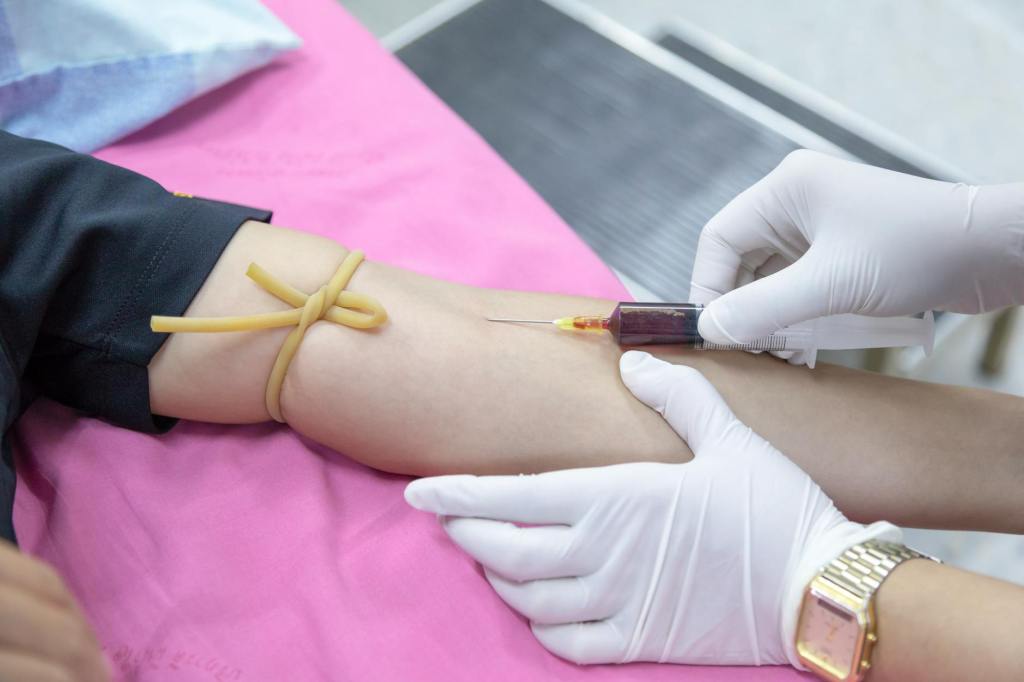
This morning, I had my routine monthly blood tests. I get these quite often and know my body—and my veins, which are sometimes tricky. When I arrived at my appointment, I noticed a new phlebotomist. As usual, I explained that my veins tend to roll and that one side is better for drawing blood.

Unfortunately, my advice went unheard. Not only did he overlook my concerns about my veins, but he also failed to address my need for clear communication. I had told him that I am hard of hearing and need him to speak directly to me instead of turning his back.

I work in a fast-paced customer service job, speaking with many people every day. At the end of a long day, all I want is to remove my hearing aids and enjoy the silence. Having spent most of my life in customer service, I understand the challenges of balancing customer demands with providing quality service. But I also know that true service goes beyond just hearing; it’s about truly listening.

Dealing with an invisible disability comes with unique challenges. Listening to people costs nothing but can make a huge difference. Today’s experience highlighted a gap in how some service providers train their staff—not just in technical skills, but in valuing patients as individuals. It felt as though I was just another patient being processed through a conveyor belt.

By the time I left, both of my arms were sore, bruised, and bandaged. But what left the deepest mark was the feeling of being ignored.
Small Changes, Big Impact – My January Resolutions.

As January 1st approaches, so do the typical New Year’s resolutions. Gyms become packed with people hoping to exercise more and lose weight, and exercise machines and gym clothes are on sale everywhere. However, not every resolution has to be a huge, overwhelming goal that is unlikely to be followed through. Instead, choose a couple of realistic ones—and maybe one big, ambitious goal for fun.

Personally, I avoid setting wild resolutions because my life is already hectic enough. But here are some simple, achievable resolutions I’m committing to for the new year ahead, focusing on my well-being and peace of mind:

As January 1st approaches, so do the typical New Year’s resolutions. Gyms become packed with people hoping to exercise more and lose weight, and exercise machines and gym clothes are on sale everywhere. However, not every resolution has to be a huge, overwhelming goal that is unlikely to be followed through. Instead, choose a couple of realistic ones—and maybe one big, ambitious goal for fun.

Personally, I avoid setting wild resolutions because my life is already hectic enough. But here are some simple, achievable resolutions I’m committing to for the new year ahead, focusing on my well-being and peace of mind:

  1. Toss out old makeup and check expiration dates.
    Beauty products can expire and become ineffective or even harmful. It’s time for a refresh!
  2. Replace those worn-out toilet cleaning brushes.
    We all know how grimy these can get. A new brush will keep things fresh!
  3. Go through your home library and donate a few books.
    Clear out books you no longer need, and pass them on to a local charity or library to give them new life.
  4. Tackle one junk drawer.
    Pick a drawer in your home, clean it out, and organize it. Small decluttering efforts make a big difference.
  5. Commit to one day a month without social media.
    Giving yourself a break from screens can improve mental health and foster more meaningful connections.
  6. Reach out to a friend you haven’t heard from in a while.
    Life can get busy, but reconnecting with old friends can be refreshing and rewarding.
  7. Meet a friend for a walk or a hike.
    Physical activity paired with quality time is a great way to bond while staying active.
  8. Update all your security settings.
    Make sure all your accounts have strong passwords, two-step authentication, and up-to-date security settings.
  9. Remember that there is life beyond work.
    Balance is key to avoiding burnout, so take time for yourself outside of your professional commitments.
  10. “Buy Flowers for Yourself Once a Week”

Flowers have a way of brightening up any space and boosting your mood. Make it a weekly habit to treat yourself to a fresh bouquet. It’s a simple, inexpensive way to bring beauty and joy into your life—plus, it’s a reminder to take care of yourself!

These resolutions are manageable and focused on improving my everyday life. Feel free to use my goals as a base and adapt to your life and I hope you’ll consider setting your own personal, achievable goals this year!

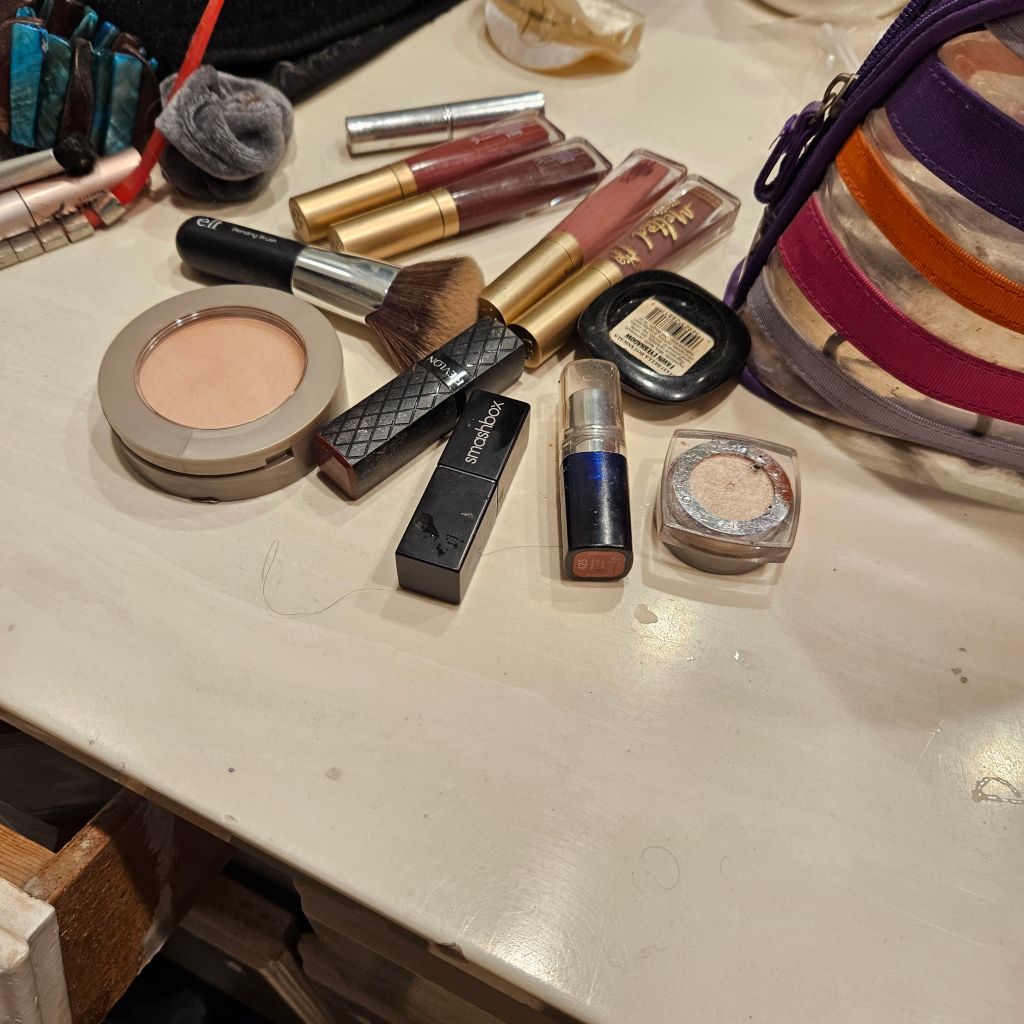
Apparently, I have a gazillion lipsticks  and o don’t even use any of these colors!

An Old Dog, A New Couch, and Social Media: Learning New Tricks

They say you can’t teach an old dog new tricks. I challenge that saying.
Our dogs were always allowed on the couches—until this past week. After 23 years, we finally bought a new one. We sure needed it. The old one was ratty, my Sagey girl had dug holes in it, and my other half used duct tape to try and fix those holes.

For the past couple of years, my better half kept saying, “Once the dog dies, we’ll get a new sofa.” Well, sadly, my Sagey girl passed away very unexpectedly, and yes, I’m still crying. Yes, she was just a dog, but my heart is still filled with grief daily.

With Sage gone and the sofa looking worse for wear, it was truly time to get a new one. My very choosy partner went to his favorite store’s website and found a sofa he liked—an L-shaped, leather, greenish-blue one.

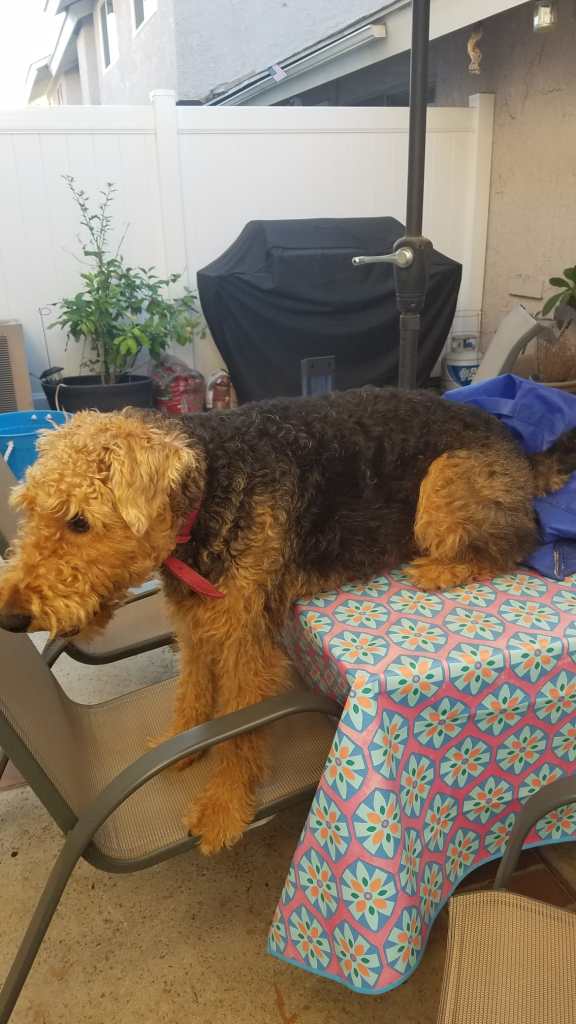
Sage is gone, but my two grand-dogs are very much alive, very lively, and they love to jump on sofas. So the question became: How do we make sure they don’t climb on the new one? Apparently, you can teach an old dog new tricks, because after a few days, Benjito the schnauzer and Cedar the Australian Shepherd got the message (mostly).

I’m not a huge fan of social media. Sure, I can spend time scrolling through reels and other people’s posts, but I’ve never been particularly invested in it. That is, until my kids challenged me to try it. I opened a TikTok account for Sagey, and to my surprise, it took off—well, not wildly, but good for a mid-century modern-aged woman.

The past year has been a bit difficult. My country is at war, my husband was laid off, and my dog died. It really sounds like a country song, doesn’t it? My brain pretty much shut down. But over the last couple of months, my mind has started to function again. Creativity is flowing, and I decided to dive into learning about social media. I’m learning a lot—watching tutorials, signing up for every class I can find on the subject, and, of course, posting. Not everything I post is great, but I’m learning and improving with every post.

Will I quit my full-time job? No. Am I making money from anything I post? Not yet, but maybe one day. Is it nice to see the “insights” area under my posts say “earned,” even if the number is zero? Absolutely. So, this old dog is learning new tricks, too.

More Than a Birthday: The Power of Friendship and Support

I had a great day yesterday, as my group of friends celebrated a major milestone: one of our own turned sixty! Instead of going out for drinks or dinner—which would have been the easy route—we opted for a day trip. The birthday girl chose the Huntington Library and Botanical Gardens for our special day together.

The Huntington Library had been on my to-do list for years. I’ve lived in the area for the last 30 years and had never made the time to visit. The place is simply beautiful, and on a typical Southern California December day, it was hot—77 degrees in December! We had a lovely time, enjoying a private tour, a delicious lunch, and some good coffee.

But what really made the day special wasn’t just the fact that we were celebrating a birthday—it was the fact that we were together as a group. We’ve been friends for more than fifteen years, and we come from very diverse backgrounds, with different political views, life stages, and experiences. Despite our differences, we manage to celebrate each other and be there for one another.

During the COVID-19 pandemic, we became each other’s “bubble group,” offering support through both happy and difficult times. Luckily, our husbands get along too, which makes everything even more enjoyable!

We make sure to carve out time for each other in our busy lives. We try to check in weekly, and we’ve established our own “headquarters” at a local coffee shop. What makes our friendship work is that, despite our differences, we respect each other’s viewpoints and cherish each other in every other way.

They say that having strong friendships and a solid support system is one of the most important factors for happiness in life, and I truly believe that. Surround yourself with good friends—friends who will be there not only for the good and easy days but especially for the bad ones, and for every milestone you experience along the way.

Laughing at Parenthood: Dreams, Gas Tanks, and Growing Up

I got an angry phone call from my daughter today. Not that this is unusual, but this time it was funny. Apparently, she dreamt that I took her car without telling her, changed all of her settings, and then left it in the middle of the street. I asked her if I also left her gas tank empty, and she said, “No.”

During my kids’ teenage years, when we had only two cars, my car would frequently be returned to me with all the settings messed up and with an empty gas tank. So, hearing her complain about this in a dream felt like semi payback, even if it was just in her subconscious.

I’m thinking of giving her suggestions for future dreams—like leaving the kitchen clean and coming back to find the sink full, or folding and ironing laundry, only to discover it smooshed because someone sat on it. I could also suggest dreaming of empty containers in the refrigerator and pantry, so when she thinks there’s still milk or butter, all she finds is an empty container and is left with black coffee instead.

Social media is full of funny stories and skits about parents getting payback for their kids’ shenanigans once they become adults and parents themselves. And truthfully, it is funny. But watching our kids become adults is a whole different experience.

One of my gym friends showed me pictures of her new grandbaby and mentioned how enlightening it is to see our kids as parents. She said she never knew how her son would be as a dad, and it was awe-inspiring to witness the transition into full adulthood.

I haven’t experienced that yet, but I’m looking forward to it. My middle child is getting married in six months, and I can’t wait to see her as a wife and, eventually, a mother. Oh, and I really can’t wait to hear her complain about the food missing from the fridge and the empty gas tank in her car.


Thanksgiving 2024 

Thanksgiving is upon us, a holiday that unites all Americans, regardless of their religious beliefs. It’s a secular family holiday that forces us to pause, look at our lives, and reflect on what we are truly thankful for. The easiest answer when asked what you’re thankful for might be health or money, but sometimes, you have to dig deeper and introspect—even if the answer is something just for yourself.

This past year has not been an easy one for my family and me. My husband was laid off from a big high-tech company, our family dog passed away unexpectedly, my home country has been in the midst of an ongoing war, and my PTSD returned. Truthfully, my heart was broken, and I cried more than I care to admit. Yet, even in the darkest corners of my heart, hope remained—small but steady—and for that, I am thankful.

I am thankful that, after less than a year, my husband found a new job. Reinventing yourself in your late fifties is no small feat, but he did it. I’m thankful that my adult children have found wonderful life partners who truly care for them.

I’m thankful that we managed to survive this difficult year and still found time to take a vacation, despite everything. I’m thankful for all I’ve learned about myself—about my strength, resilience, and abilities. I’m thankful that my imposter syndrome shrank a little this year. I’m also incredibly thankful for the growth and success of my side hustle, which I am working hard to expand next year. It’s exciting to see my M.B.A. skills come to life in my new business venture, and I’ve discovered a new passion along the way.

Despite all the hardships, I am thankful that hope never fully died. It may have flickered at times, but it always found its way back.

Finding Balance When Life Gets Out of Sync

I’m technically on vacation this week—well, a forced vacation, as our office is closed. In my mind, vacation means fun, sleeping in, taking naps, and enjoying good meals. But apparently, my mind and my reality are not on the same page. I haven’t slept in once, and fun seems to be in short supply.

The first day of my “vacation” didn’t involve a flight to Hawaii or a relaxing retreat. Instead, it included a root canal. Yes, a root canal. Working non-stop for seven weeks meant that not only was I exhausted, but I also neglected my health, sleep, and all my appointments. The only thing I didn’t sacrifice was Pilates. I stuck with it, no matter how tired I felt, and honestly, it became my lifesaver.

Don’t get me wrong—I’m all about maintaining a healthy work-life balance. But life circumstances changed earlier this year. My husband lost his high-tech job as part of the massive layoffs happening everywhere, and I became the primary breadwinner. Not only did I take on a regular 40-hour job, but I also had a side hustle. To make ends meet until my husband found another job, I had to pour more energy into that side business.

And so, the concept of work-life balance pretty much flew out the window. In addition to my full-time job that covered health insurance and paid the bills, I dedicated time to building my side hustle. The positive side of this was that I became laser-focused on its development and the direction I wanted it to go. The downside? Exhaustion. Exhaustion to the point where even sitting down to read a short book felt like a monumental effort.

Luckily, my husband has found a new job, and I’m able to worry a little less. But finding that elusive balance again is no easy feat. When you’ve spent so long running on stress, it’s hard to suddenly switch gears and restore equilibrium. My brain has become so accustomed to juggling multiple tasks at once that it doesn’t know how to slow down and regain some semblance of balance and sanity.

Scheduling doctor and dentist appointments is a step in the right direction—at least I’m putting my health first. But it doesn’t necessarily help my mental state. I’m also using this “vacation” to focus a bit more on my side hustle and how to turn it into a profitable business.

Will I manage to get some rest, or at least sneak in a nap during my time off? I’m not sure, but I’ll definitely do my best to make it happen.

Adapting to Hearing Loss: My Personal Journey

At my last Pilates class, my instructor told me that I am quick to follow directions. I didn’t think much of it at first—after all, I’m naturally fast. But as I reflected on it, I realized that my speed isn’t about being prepared. It’s because I can’t hear.

You’d think that losing my hearing, wearing hearing aids, and not enjoying background music in a class would make me slower to follow directions. In fact, it’s the opposite.

I suffer from SSHL, or sudden sensorineural hearing loss, which took away my hearing almost overnight in 2020. It happened during the height of the pandemic, and securing an in-person doctor’s appointment was difficult. By the time I saw an ENT, my hearing loss was permanent.

Losing my hearing isn’t just about the absence of sound; it involves my brain, too. Comprehending what’s being told to me, processing information, and responding appropriately all require more effort and concentration than they did before.

We all cope with losing a vital sense in different ways. Some retreat into themselves, others embrace their new reality, and some, like me, find ways to adapt. After the shock wore off and I realized that my life would never be the same, depression set in. I was consumed with fear about how I would continue living. It’s hard to work in customer service when you can’t hear what people are saying, especially when masks and barriers were mandatory.

At first, I avoided crowds, restaurants, and most social interactions. I thought I was doing the right thing, but in reality, I was isolating myself. As an introvert, I found it strangely comforting to be alone. But then I realized I still enjoyed being around people. So, I developed a kind of “superpower”—anticipating what people were about to say or do. Not being able to hear forced me to watch and observe. I learned to read body language, facial expressions, and subtle cues. In noisy environments, I became a silent observer, finding the smallest gestures fascinating and, oddly enough, entertaining.

When my Pilates instructor complimented me on my quickness, I just smiled. People don’t need to know that my brain is constantly processing, predicting, and observing. It’s my way of adapting to a world I can no longer hear in the same way.

We all have our coping mechanisms, this is mine and I hope that everyone finds their own way.

Living With Grief After Losing a Beloved Dog

We lost our dog this past July, and the shock still lingers. She was young and seemingly healthy, so her sudden passing took us all by surprise. One day, she was her lively self, barking at the Amazon truck, and the next, we found ourselves at the emergency vet.

Our grief has been profound, especially since not everyone in the family got to say goodbye. She had regular check-ups, medication, and pet insurance, so we never expected this outcome. Each of us is grieving in our own way; there’s no manual for it. My youngest and I finally put away her crate, toys, and dog bed, saying our final goodbyes to her space in our home. Other family members chose a toy to keep as a memento. As for me, I find myself somewhere in between.

While the house is now free of her toys, my car still holds her presence—her nose prints on the back windows remain, offering a bittersweet comfort every time I get in.

I’ve been asked if I’ll get another dog. I probably will, but not yet. I’m not ready for the final goodbye and the full letting go. She was my companion for seven years, a mirror to my feelings, and a source of comfort when I lost my hearing.

We cherish the wonderful memories of her life filled with walks, treats, and endless love. She is missed every day. I’m almost ready to let go, but not quite—just lingering in that space of grief. It truly is a funny thing.

When Employees Feel Unheard

There is nothing worse than feeling unheard at your workplace. It makes you feel invisible, like just another cog in the machine. Each year, you receive an anonymous survey where you are supposed to express your concerns in hopes of being heard. Yet, year after year, nothing changes.

We all experience this feeling, whether we work in a large corporation or a small family-run business. We have good ideas that could benefit the company, yet they often go ignored. Worse still, when we alert management about misbehavior or processes that harm employees and create unnecessary work, we are dismissed or told we are wrong.

When it’s just you, it’s easy to question your own perceptions. However, when multiple employees share similar feelings, it becomes clear that there may be validity in those concerns. Granted, employers are not obligated to heed employees’ suggestions, even when they are valid. Both big corporations and small family-owned businesses typically owe employees little more than a salary—at least, that’s how many of us feel.

Feeling unheard leads to feelings of unappreciation, which do not simply vanish. Instead, they foster resentment and unhappiness with our jobs. We begin to question our motivations for working, prompting us to dust off that old resume and update it. On a particularly bad day, we might even tweak our LinkedIn profiles and browse job boards. When just one employee feels this way, the company might not notice. But when multiple employees feel unheard and unhappy, the company faces a significant problem.

In a workplace suffering from corporate deafness, can anything be done? Probably. The real question is whether anyone is willing to listen and act on employee feedback. One part of the solution lies in training: equipping managers to be effective leaders who genuinely pay attention to their employees. This is fixable if there is the will to make it happen.

Another challenge arises when management is indifferent—whether because they believe the current economic climate means no one will leave, or because a manager feels untouchable as part of the family business. Some companies simply do not care, assuming they can always hire someone new. While it’s true that we are all replaceable, this mindset overlooks the costs involved. Training new employees takes time and money, and high turnover leads to inefficiency and inconsistency in work. Ultimately, management should care.

Can you force anyone to listen or to care? No. However, when undervalued employees reach their breaking point, they may simply choose to leave, taking their knowledge and great ideas with them.