Start Your Day Right: The Power of Making Your Bed

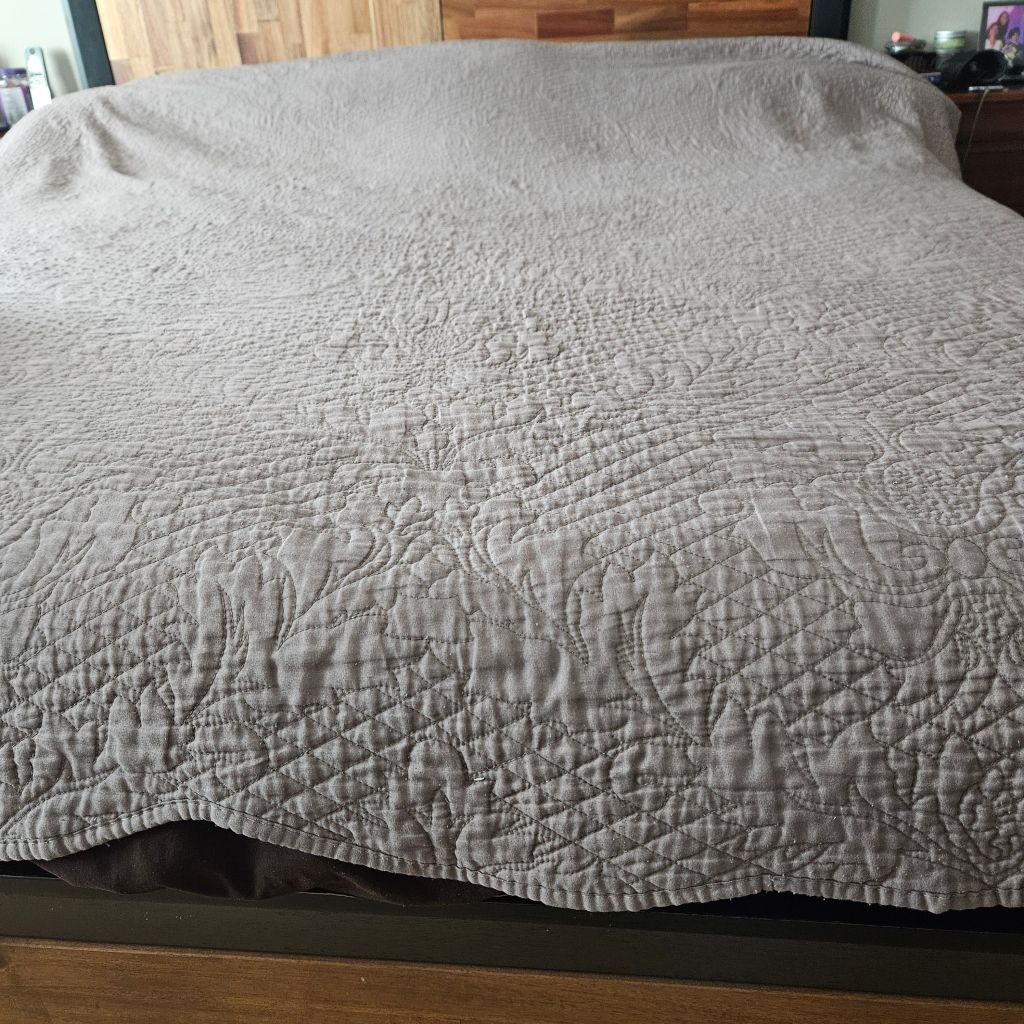
I saw something interesting on my TikTok feed this week: an inspirational speech by Admiral William McRaven. Although it was an old one, it still resonated with me. McRaven said, “If you want to change the world, start by making your bed.” My first reaction to this was, huh? As a young adult, I always argued with my mother about making the bed. I never understood the point of it, especially if I was just going to mess it up again later. I hated making my bed, and I’m not even sure why I kept arguing about it.

But then, McRaven explained that making your bed in the morning is the first task you accomplish of the day. It’s a simple, basic task, but it’s a completed task nonetheless. When you start your day by completing just one thing, it sets the tone for accomplishing more throughout the day.

Often, when we decide to make huge changes in our lives—especially around New Year’s—we aim for something big without breaking it down into smaller, achievable steps. And when we can’t figure out how to tackle it, we give up. Many people say they want to organize their house this year, but that’s such a big, vague task that most give up by the second week of January. If we instead commit to organizing one drawer each month, it becomes more achievable and easy to manage. We often say we’ll lose weight or enroll in a gym, but forget to break our exercise routines into small, manageable steps.

Life isn’t always about the end goal, but about how we reach it. We need to write down our plans, break them into smaller steps, and focus on accomplishing those.

So, start your morning by making your bed. It doesn’t need to be perfect, but seeing that one small task completed will give you the motivation to continue. I know it always makes me feel happy and ready to take on the day.
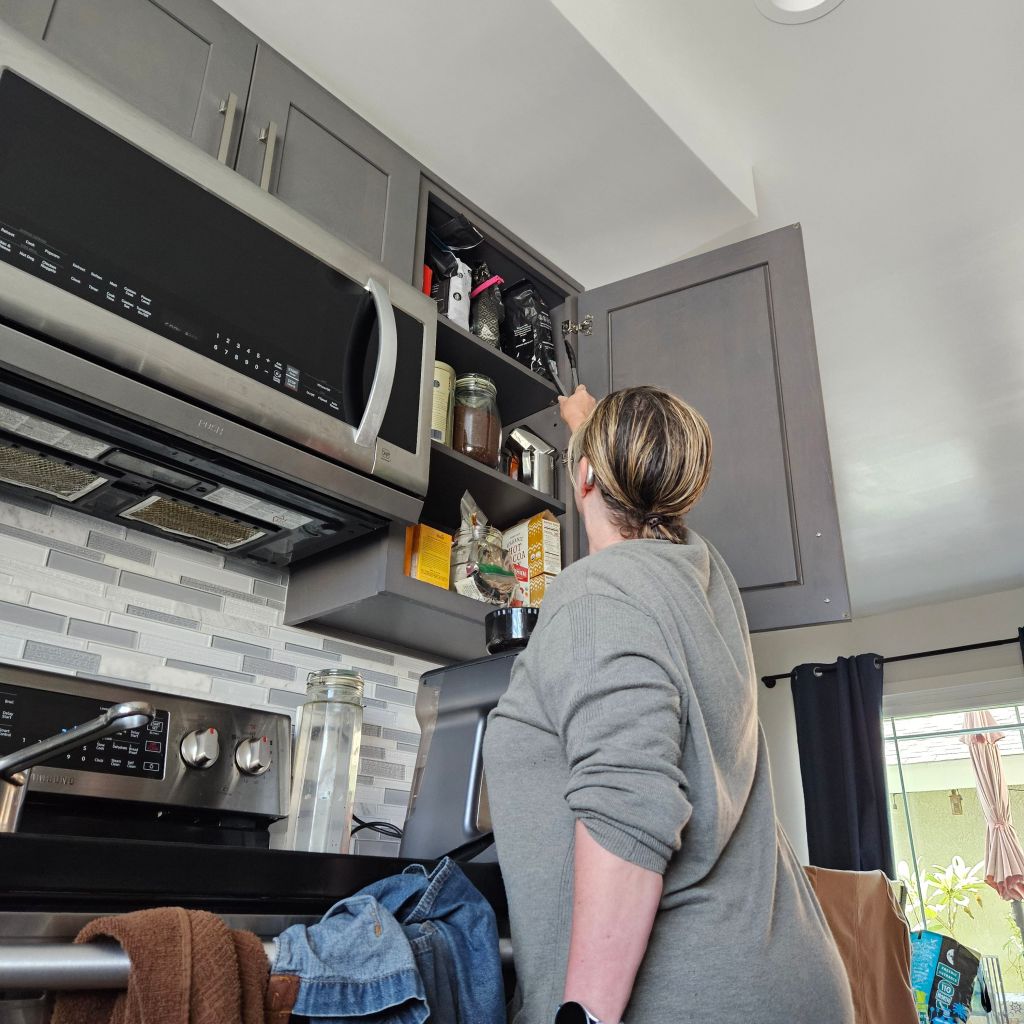
Living with a Height Difference: Shelf Life Struggles

We are a house divided, but not by sports teams or political views. It’s something far more concrete—our height—and, more specifically, where we place things on shelves.

I’m what you might call fun-sized, or, as others might say, petite, vertically challenged, or short. My other half, however, is above average height—at 6’2″, we literally have a whole foot of difference between us. I’ve been short all my life, so this was hardly a surprise to him when we got married.

I used to wear heels—heck, I could even run in them. But in the last 30 years, things have changed. Since having kids, I swapped stilettos for sneakers. Playgrounds, strollers, and dog walking are much easier in flats!

Now, my taller half prefers everything to be placed higher up. As for me? I constantly need a step stool just to reach anything. I’ve developed a rather uncanny ability to use everyday utensils to grab things from high shelves, but let’s be real—I’d much rather have everything within reach.

I always thought it was easier to bend down than to reach up, but I might have been wrong. He can never seem to find anything that’s at my eye level. Meanwhile, I’ve learned that shelves at my height are the perfect place to hide things in plain sight from him.

I really tried to compromise. I moved some everyday items to a taller shelf, but that didn’t seem to solve the problem.

Yesterday, he complained about not finding anything because I’d put all the common items on lower shelves. I reminded him, jokingly, that I’ve always been short. He didn’t have a response. Guess there’s no winning when it comes to height!

The Importance of Patient Communication in Healthcare.

Or Bruised, Bandaged and Ignored!

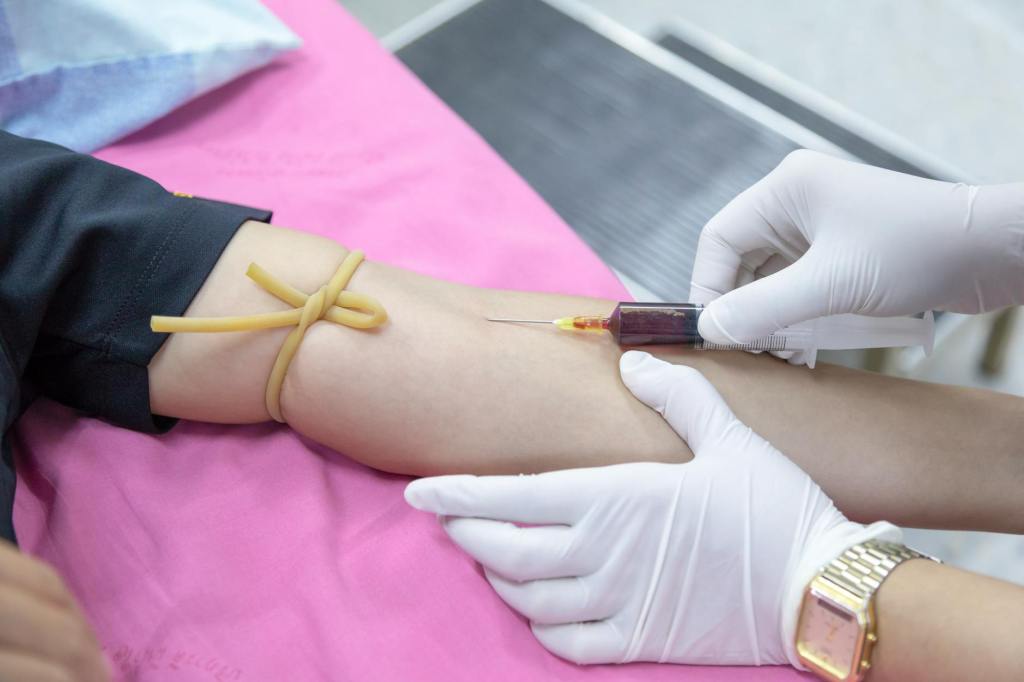
This morning, I had my routine monthly blood tests. I get these quite often and know my body—and my veins, which are sometimes tricky. When I arrived at my appointment, I noticed a new phlebotomist. As usual, I explained that my veins tend to roll and that one side is better for drawing blood.

Unfortunately, my advice went unheard. Not only did he overlook my concerns about my veins, but he also failed to address my need for clear communication. I had told him that I am hard of hearing and need him to speak directly to me instead of turning his back.

I work in a fast-paced customer service job, speaking with many people every day. At the end of a long day, all I want is to remove my hearing aids and enjoy the silence. Having spent most of my life in customer service, I understand the challenges of balancing customer demands with providing quality service. But I also know that true service goes beyond just hearing; it’s about truly listening.

Dealing with an invisible disability comes with unique challenges. Listening to people costs nothing but can make a huge difference. Today’s experience highlighted a gap in how some service providers train their staff—not just in technical skills, but in valuing patients as individuals. It felt as though I was just another patient being processed through a conveyor belt.

By the time I left, both of my arms were sore, bruised, and bandaged. But what left the deepest mark was the feeling of being ignored.

Small Changes, Big Impact – My January Resolutions.

As January 1st approaches, so do the typical New Year’s resolutions. Gyms become packed with people hoping to exercise more and lose weight, and exercise machines and gym clothes are on sale everywhere. However, not every resolution has to be a huge, overwhelming goal that is unlikely to be followed through. Instead, choose a couple of realistic ones—and maybe one big, ambitious goal for fun.

Personally, I avoid setting wild resolutions because my life is already hectic enough. But here are some simple, achievable resolutions I’m committing to for the new year ahead, focusing on my well-being and peace of mind:

As January 1st approaches, so do the typical New Year’s resolutions. Gyms become packed with people hoping to exercise more and lose weight, and exercise machines and gym clothes are on sale everywhere. However, not every resolution has to be a huge, overwhelming goal that is unlikely to be followed through. Instead, choose a couple of realistic ones—and maybe one big, ambitious goal for fun.

Personally, I avoid setting wild resolutions because my life is already hectic enough. But here are some simple, achievable resolutions I’m committing to for the new year ahead, focusing on my well-being and peace of mind:

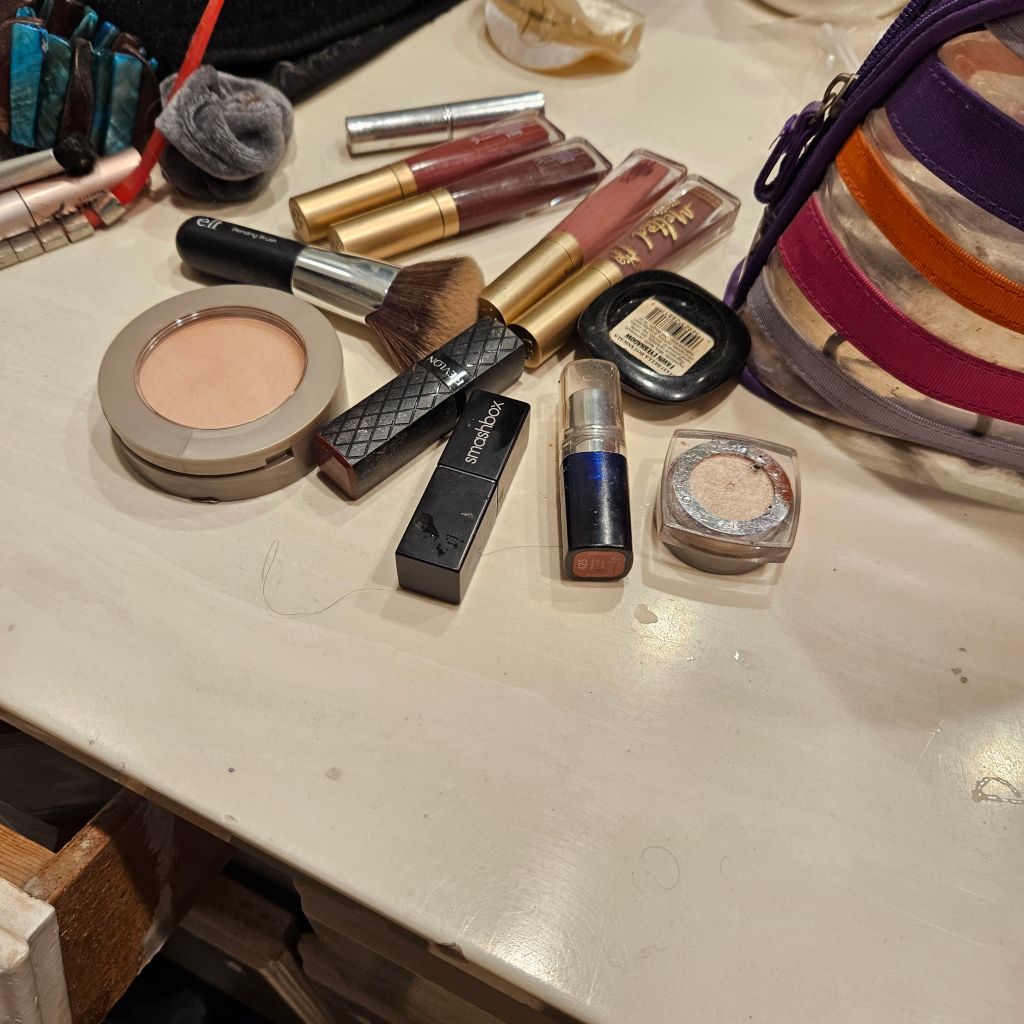
  1. Toss out old makeup and check expiration dates.
    Beauty products can expire and become ineffective or even harmful. It’s time for a refresh!
  2. Replace those worn-out toilet cleaning brushes.
    We all know how grimy these can get. A new brush will keep things fresh!
  3. Go through your home library and donate a few books.
    Clear out books you no longer need, and pass them on to a local charity or library to give them new life.
  4. Tackle one junk drawer.
    Pick a drawer in your home, clean it out, and organize it. Small decluttering efforts make a big difference.
  5. Commit to one day a month without social media.
    Giving yourself a break from screens can improve mental health and foster more meaningful connections.
  6. Reach out to a friend you haven’t heard from in a while.
    Life can get busy, but reconnecting with old friends can be refreshing and rewarding.
  7. Meet a friend for a walk or a hike.
    Physical activity paired with quality time is a great way to bond while staying active.
  8. Update all your security settings.
    Make sure all your accounts have strong passwords, two-step authentication, and up-to-date security settings.
  9. Remember that there is life beyond work.
    Balance is key to avoiding burnout, so take time for yourself outside of your professional commitments.
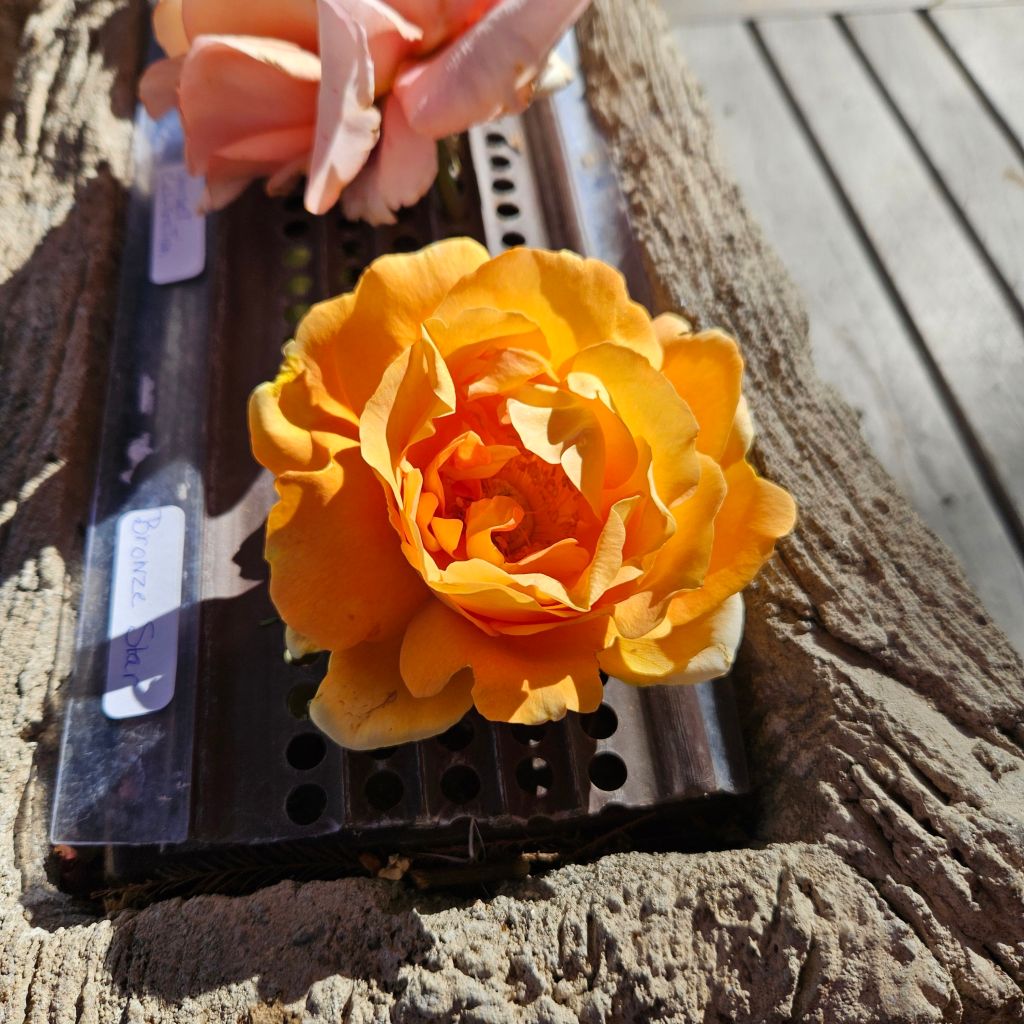
  10. “Buy Flowers for Yourself Once a Week”

Flowers have a way of brightening up any space and boosting your mood. Make it a weekly habit to treat yourself to a fresh bouquet. It’s a simple, inexpensive way to bring beauty and joy into your life—plus, it’s a reminder to take care of yourself!

These resolutions are manageable and focused on improving my everyday life. Feel free to use my goals as a base and adapt to your life and I hope you’ll consider setting your own personal, achievable goals this year!

Apparently, I have a gazillion lipsticks  and o don’t even use any of these colors!

More Than a Birthday: The Power of Friendship and Support

I had a great day yesterday, as my group of friends celebrated a major milestone: one of our own turned sixty! Instead of going out for drinks or dinner—which would have been the easy route—we opted for a day trip. The birthday girl chose the Huntington Library and Botanical Gardens for our special day together.

The Huntington Library had been on my to-do list for years. I’ve lived in the area for the last 30 years and had never made the time to visit. The place is simply beautiful, and on a typical Southern California December day, it was hot—77 degrees in December! We had a lovely time, enjoying a private tour, a delicious lunch, and some good coffee.

But what really made the day special wasn’t just the fact that we were celebrating a birthday—it was the fact that we were together as a group. We’ve been friends for more than fifteen years, and we come from very diverse backgrounds, with different political views, life stages, and experiences. Despite our differences, we manage to celebrate each other and be there for one another.

During the COVID-19 pandemic, we became each other’s “bubble group,” offering support through both happy and difficult times. Luckily, our husbands get along too, which makes everything even more enjoyable!

We make sure to carve out time for each other in our busy lives. We try to check in weekly, and we’ve established our own “headquarters” at a local coffee shop. What makes our friendship work is that, despite our differences, we respect each other’s viewpoints and cherish each other in every other way.

They say that having strong friendships and a solid support system is one of the most important factors for happiness in life, and I truly believe that. Surround yourself with good friends—friends who will be there not only for the good and easy days but especially for the bad ones, and for every milestone you experience along the way.

Laughing at Parenthood: Dreams, Gas Tanks, and Growing Up

I got an angry phone call from my daughter today. Not that this is unusual, but this time it was funny. Apparently, she dreamt that I took her car without telling her, changed all of her settings, and then left it in the middle of the street. I asked her if I also left her gas tank empty, and she said, “No.”

During my kids’ teenage years, when we had only two cars, my car would frequently be returned to me with all the settings messed up and with an empty gas tank. So, hearing her complain about this in a dream felt like semi payback, even if it was just in her subconscious.

I’m thinking of giving her suggestions for future dreams—like leaving the kitchen clean and coming back to find the sink full, or folding and ironing laundry, only to discover it smooshed because someone sat on it. I could also suggest dreaming of empty containers in the refrigerator and pantry, so when she thinks there’s still milk or butter, all she finds is an empty container and is left with black coffee instead.

Social media is full of funny stories and skits about parents getting payback for their kids’ shenanigans once they become adults and parents themselves. And truthfully, it is funny. But watching our kids become adults is a whole different experience.

One of my gym friends showed me pictures of her new grandbaby and mentioned how enlightening it is to see our kids as parents. She said she never knew how her son would be as a dad, and it was awe-inspiring to witness the transition into full adulthood.

I haven’t experienced that yet, but I’m looking forward to it. My middle child is getting married in six months, and I can’t wait to see her as a wife and, eventually, a mother. Oh, and I really can’t wait to hear her complain about the food missing from the fridge and the empty gas tank in her car.


Adapting to Hearing Loss: My Personal Journey

At my last Pilates class, my instructor told me that I am quick to follow directions. I didn’t think much of it at first—after all, I’m naturally fast. But as I reflected on it, I realized that my speed isn’t about being prepared. It’s because I can’t hear.

You’d think that losing my hearing, wearing hearing aids, and not enjoying background music in a class would make me slower to follow directions. In fact, it’s the opposite.

I suffer from SSHL, or sudden sensorineural hearing loss, which took away my hearing almost overnight in 2020. It happened during the height of the pandemic, and securing an in-person doctor’s appointment was difficult. By the time I saw an ENT, my hearing loss was permanent.

Losing my hearing isn’t just about the absence of sound; it involves my brain, too. Comprehending what’s being told to me, processing information, and responding appropriately all require more effort and concentration than they did before.

We all cope with losing a vital sense in different ways. Some retreat into themselves, others embrace their new reality, and some, like me, find ways to adapt. After the shock wore off and I realized that my life would never be the same, depression set in. I was consumed with fear about how I would continue living. It’s hard to work in customer service when you can’t hear what people are saying, especially when masks and barriers were mandatory.

At first, I avoided crowds, restaurants, and most social interactions. I thought I was doing the right thing, but in reality, I was isolating myself. As an introvert, I found it strangely comforting to be alone. But then I realized I still enjoyed being around people. So, I developed a kind of “superpower”—anticipating what people were about to say or do. Not being able to hear forced me to watch and observe. I learned to read body language, facial expressions, and subtle cues. In noisy environments, I became a silent observer, finding the smallest gestures fascinating and, oddly enough, entertaining.

When my Pilates instructor complimented me on my quickness, I just smiled. People don’t need to know that my brain is constantly processing, predicting, and observing. It’s my way of adapting to a world I can no longer hear in the same way.

We all have our coping mechanisms, this is mine and I hope that everyone finds their own way.

Nothing makes sense

What happens when you lose your hearing? Do you suddenly get a superpower ? A brand new sense or an enhanced one. They say that when you lose a sense, another sense gets stronger to compensate. When I lost my hearing there were no sudden bells, whistles or trumpets announcing my new strengthened alternate sense. Most likely because I could not hear them.   Nothing exciting happened, I did not become spiderman and the only superpower I got was the on and off button on my hearing aids. Hence my lovely pair of hearing aids, nice expensive silver colored. Not even a fun blue color to match my eyes.

My sense of smell did increase slightly  but I am not sure that this is a good thing considering I have a dog and a grand dog.  While I did loose a major sense I did gain observation, not by choice but by necessity. Since I can’t always follow a conversation I started to pay more attention to facial expressions and body language. You learn a lot from watching people and standing on the sidelines. In big crowds and noisy places it is very hard for me to hear, so standing on the sidelines was out of practicality. You see if someone is uncomfortable, happy, deceptive and you start getting a sense of what they actually think and feel from their body language. For me it is still a work in progress to understand everything I see but this is a welcome challenge and a it is little entertaining.

You also learn a lot from looking at people’s faces when they speak to you, surprisingly many are not comfortable with people looking at them directly. Might be that eye contact with humans was lost during the pandemic zoom era. But as a hearing impaired person it is a valuable tool as I am learning to read lips.

My husband would say that despite my new observation skills I still do not pay attention to what he says, but in all fairness I didn’t pay attention before I lost my hearing so technically it’s a habit and not a choice and maybe a tiny superpower. I took me 35 years together to perfect this skill.

Benchmarks or how I became a prune.

A year and a half ago I broke my foot, it was completely my fault as instead of looking where I was going, my eyes were glued to my cell phone and I stepped down a step straight onto my dog’s 3 pronged nylabone and lost my balance. Completely avoidable!

Showering was not fun with a broken foot as I needed to sit in a chair in the shower and where the chair could be positioned meant I could not reach the on/off valve. I am after all  what some people call “fun size” or vertically challenged. That meant that my husband had to be around and turn the water off for me. And here lies the problem, he forgot me. He sometimes had to answer work calls or someone pinged him on teams and he just forgot me. He claims he really did not forget, he was just getting around to it, really. While I was sitting in the shower with the water all over me I considered adding a middle name , Prune. You would think that sitting in the warm water is nice, it is, to a point. I managed, god knows how, to get up on one functioning leg, turn off the faucet and get out of the shower while maneuvering the chair to do this. Surprisingly I did not break any other bones in my body or the shower glass door on my way out. There is something to be said about being short in a tall world, I learned tricks and ways to reach.

We  are finally  remodeling our shower, a shower that is just slightly younger than me but in many ways is stronger than me. After we agreed to compromise and my husband compromised in letting me choose whatever weird tile I wanted, the topic of adding a bench or shelf came up. My husband suggested a bench so the next time I break my foot we will not need to use a chair. My response was, thank you for the vote of confidence but why would you think I am planning on breaking my foot or anything else again? Quiet.

After a while he expanded that we might need to add some support fixtures in the future so a bench is a good idea. Now, it is a good idea as I will be able to put the shampoos and shower stuff nicely on this bench, not exactly what he meant. He suggested we put the bench on one side of the shower and could not understand what my issue was. I explained again that I am short with a very small wing span and will not be able to reach the valve from the bench. Apparently after being together 35 years he never noticed that I am a head and a half shorter than him. 

We are currently at a stand still about this great bench, it will be another bench mark in our ongoing relationship. 

Made my 1st online sale

I made my first sale on poshmark yesterday and I was very excited, no I am not endorsing poshmark and I will not be retiring any time soon. The reason I am excited is that I’m finally moving extra clothes I do not need or have ever used out of my house, decluttering and making a couple of bucks in the process.

Cleaning your closet is an emotional process, at least for me.  It is the process of learning to let go and actually letting go. I have clothes in sizes that will not fit me again any time soon. I kept telling myself that I will use them in the future once I lose some weight , but in reality I was afraid to admit that my body has changed and that is ok.And in reality when and if I will need smaller size clothes I can always buy more.

The other items  I am letting go off are all the great deals I got during the pandemic and boy there were really good deals, such good deals that they were never worn and still have tags on them. Shopping online was very dangerous back then, we got constant deals and free stuff. The 

the only problem with all the good deals was that I did not need them. Like many of us I worked remote and meetings were on zoom and there was no real need for dresses, dress pants or blouses. But like other people I justified it with “ I will use it when we get back to the office” , I was over optimistic. I have yet to use 80% of the items I bought and now I am sending them on a journey to a better home and in the process making enough money for a sushi dinner.