Guaranteed to Raise Your Blood Pressure—Just Add Customer Service

My cardiologist told me that I need to lower my blood pressure.
I would love to do that—sadly, there’s no magic button or app on my phone that can make it happen.

I work in customer service, and let me tell you: working in customer service is practically a guarantee that your blood pressure will be high. It might as well come with a sticker that says “100% Guaranteed.”

Customer-facing jobs have never been easy or appreciated much. You need a strong personality to last in them. Apparently, I have one—I’ve been in this industry for over thirty years.

This week, our phones were out for a day due to a VOIP outage. Honestly, it was kind of great for a few hours… until they started working again. Then the ringing didn’t stop.

Technically, not a problem. But the first call I was lucky enough to answer?

No greeting. No polite chit chat. I was immediately yelled at.

I asked the customer to explain the issue, and she just kept yelling. I asked again, politely, but she continued, yelling about a conversation she’d had with someone else in the office—five days ago.

I tried to stop her to ask her name (which she never gave me, too busy yelling), and I explained I couldn’t continue a conversation I wasn’t part of. That only made her yell louder.

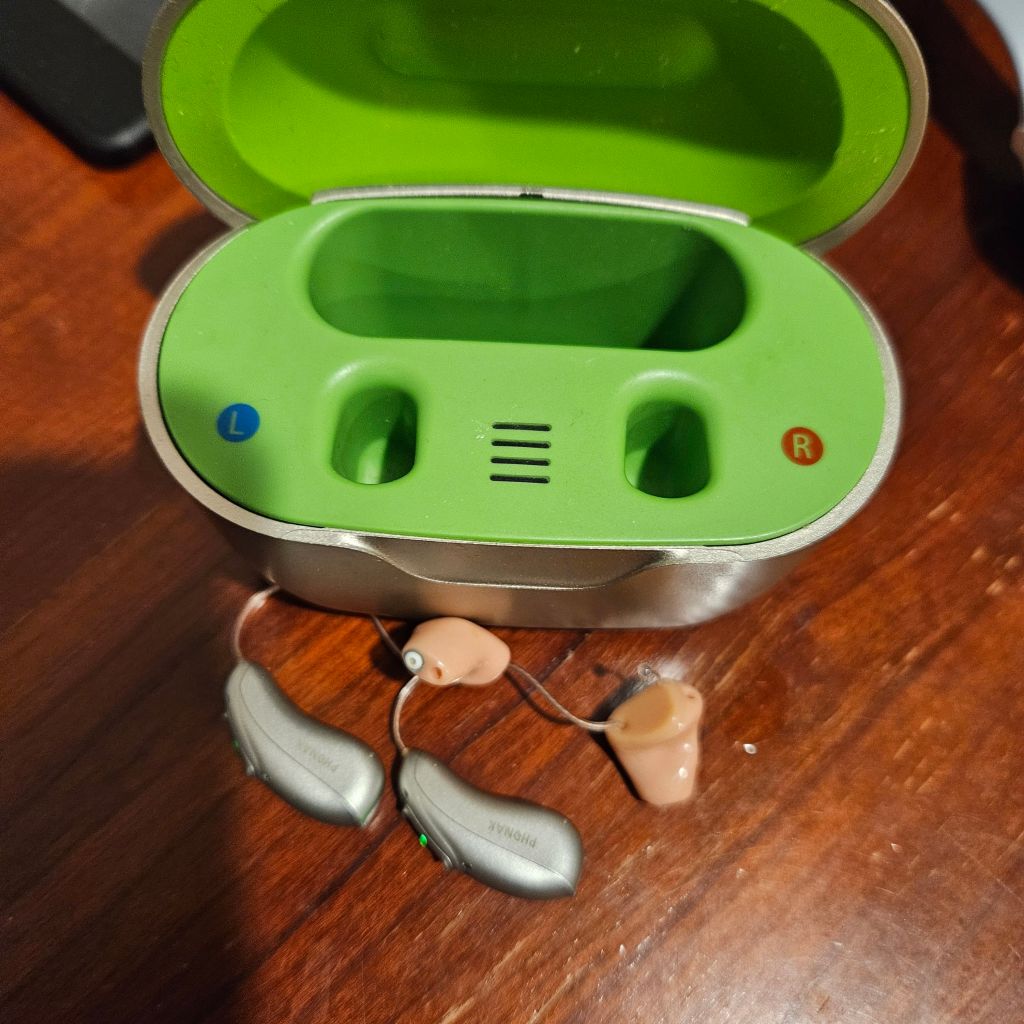
I wear hearing aids, so yelling on the phone goes straight to my ears—and it hurts. I asked her kindly to stop yelling. She didn’t. She just hung up.

I’ve been yelled at by customers before—this wasn’t new to me or my blood pressure. But I’m always perplexed when people think yelling or being rude will help them get better service.

In my experience, kindness goes a long way.

To my cardiologist’s chagrin—and my blood pressure’s detriment—I’m still here at my job. And I can’t wait for the next person to raise it.

#CustomerServiceLife #YouCantMakeThisUp #behindtheadmindesk #customerservicestories

Surveys, Feedback, and the Silence That Follows

Every year, my employer sends out an anonymous survey to gather employee feedback, but I can’t help but wonder why they even bother. It’s supposed to be a chance for employees to voice their thoughts, yet nothing ever seems to change—and I’m not sure anyone even believes it’s anonymous.

The first time I filled out the survey, I was the only one in the company with my unique position, so my feedback was easily identifiable. In the comments section, I pointed out that the survey couldn’t truly be anonymous for someone in my position. Little did they know, that was just the beginning of me becoming a “thorn” in their side.

Since then, I’ve continued to fill out the survey honestly, even though I know no one really cares about my feedback. I figured out how to make the sections for areas of improvement larger. One year, I copy-pasted my MBA thesis on leadership—full of practical advice for change—just to see if anyone would notice. It was a thesis that earned a distinction, yet still, nothing changed.

I love my job, and I genuinely like the people I work with, which is why I’m still here after many years. But I can’t help but question the purpose of these surveys. Are they just for show so the company can tick a box and say they care? Or are there companies out there that actually listen to their employees and take meaningful action?

I know this conversation has probably been had many times before, and some companies do genuinely care about their employees. But for me, I’m still not sure.

Beyond the Resume: Seeking Independence and Fulfillment

I’ve spent the last several days at home, taking care of my dog while she recovered from surgery. With all this downtime, I decided to tackle a few projects. One of those was updating my resume. I typically update it twice a year—not because I’m actively job hunting, but to ensure my information stays current and to keep up with new technology. After all, it never hurts to have an updated resume, as you never know what might come up.

But as I was updating my resume, a thought struck me—why am I doing this? What’s the point of updating my resume? Am I actively looking for a new job or a career change?

I’m in my mid-fifties, and I’ve started to think more seriously about what my future holds. The idea of working for a corporation no longer feels as appealing as it once did. So, am I looking for a new career? Not necessarily. What I’m really seeking is independence. I want financial stability, a place where my skills, knowledge, and life experience are valued and appreciated.

How do you update your resume when you’ve been in the workforce for many years, especially when you’re told it should only be one page? And with age discrimination at play, a longer resume can easily make you a target.

Did I update my resume? No, I didn’t. Instead, I decided to take a brain pause—to step back and really think about what I want for my future. It’s not about rushing into another job or career change, but about aligning my next steps with my values and goals for independence and fulfillment.

Facing Reality: My Journey from Out-of-Shape to Reclaiming My Fitness”

Today I discovered that I am an out-of-shape middle-aged woman. I knew I was middle-aged, so that was not really a surprise. The “out of shape” part, however, kind of threw me for a loop.

I started seeing a cardiologist, as it was suggested to me that, at my advanced age, I need to establish a relationship with one. It was a suggestion I listened to and actually followed through on.

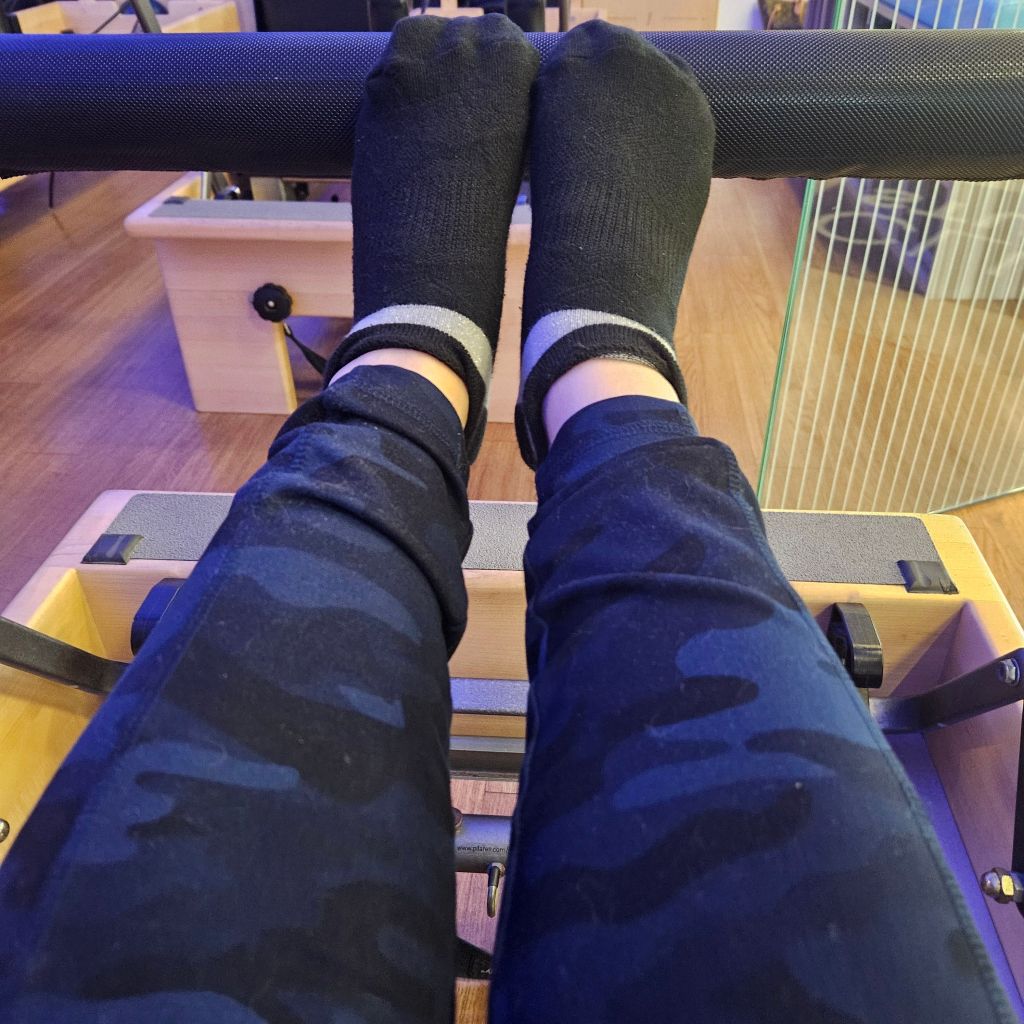
I met with the cardiologist, took a heart calcium scan, and had a stress test performed. I walk almost eleven thousand steps a day, do Pilates Reformer three times a week, eat a mostly healthy vegetarian diet, and I’m usually on the move even at work. I also lost almost thirty pounds this past year. So, I thought I would do great on the stress test—alas, I was wrong.

I used to hike a lot. I climbed all the way to the top of the Moon Pyramid in Mexico when it was still allowed, did part of the Great Wall of China, and climbed all the way up to the Pantheon on Lindos, just eight months after breaking my leg. This past summer, I biked for fourteen miles in Alaska—downhill, but I think it still counts! But apparently, all of this wasn’t enough. I am out of shape.

Naturally, I questioned this, and according to the experts, I’ve been neglecting my cardio. I thought that walking was cardio, but apparently, it’s not enough—at least not for my body.

So now comes the proactive part: how do I improve my sad state of cardio without killing myself and still enjoy it? This is a really tough question, as I hate going to the gym. I really do. I also hate running; I firmly believe that running can be uncomfortable for those of us with larger chests—it’s just not pleasant.

I already do Reformer Pilates, but that’s focused on core strength. Now, the cardio part needs to kick in. My middle child is getting married, and there’s hope for grandkids in the future, so getting in shape is a priority. The big question is: exactly how?

When I was younger, I loved biking, so I guess I’ll be biking once again. I think short hikes—with and without the dog—are destined for my future as well. And I believe I’ll also add at least one great date a week with the elliptical at the gym.

I’ll continue being middle-aged, at least for a while, but that won’t stop me from getting back in shape.

Who Saved Who? My Journey with Shuki and the Power of Patience

Patience is not a strong virtue of mine. In fact, I’m pretty sure I don’t possess such a trait. I’m one of those people who need things done yesterday, even if the idea just crossed my mind three seconds ago.

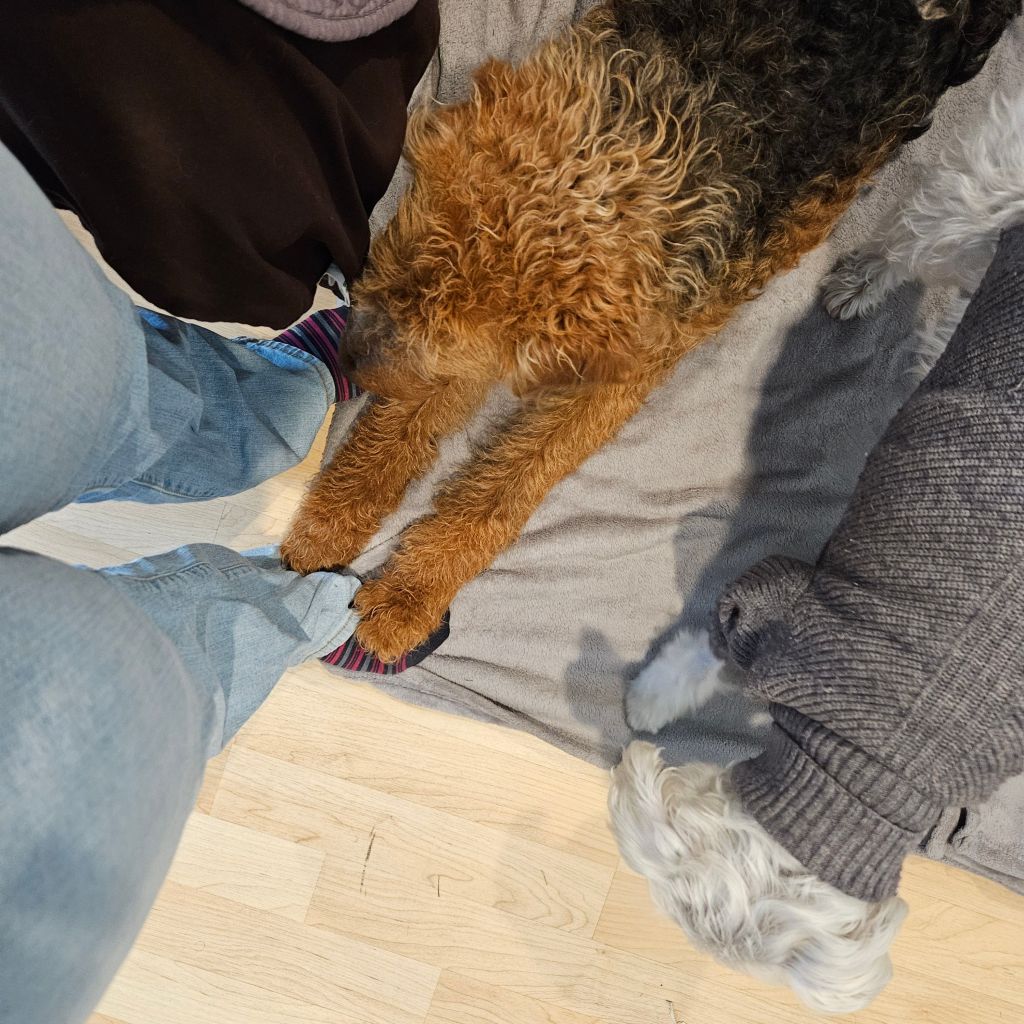
We adopted a rescue dog several weeks ago, and we have no knowledge of her age or past, other than the fact that she was malnourished, neglected, and abused. With rescue dogs, there’s the 3-3-3 rule: you need a lot of patience. The first three days, the dog decompresses from the transition. The next three weeks, the dog settles into its new routine. And around three months, the adopted dog truly settles in and understands they are safe. Of course, every dog takes their own time and behaves a little differently. But the key to a successful adoption is providing a safe environment, training, and—most importantly—patience.

Patience. Again, not one of my strong suits, but in this case, a necessity. Shuki, the Airedale, has been with us for almost six weeks now. It took time for her to realize that I am safe and won’t harm her. In the beginning, she was afraid of even my smallest movements. She ate her food like a vacuum at light speed. She learned her name, responds to it, and is getting better and stronger every day.

Some days feel like the movie 50 First Dates—every morning, it’s like we’re starting the bonding process from scratch, even though she’s been with us for weeks. Unfortunately, like the movie, I can’t ask her to relive the past through a highlight reel of her last six weeks.

And once again, patience is needed. You often see bumper stickers with the saying “Who saved who?” I’m learning that this is true. Shuki is learning to trust, and in return, she’s teaching me the invaluable lesson of patience—something I never thought I’d master at my age. For that, I am grateful.

How to lose your employee’s faith in the workplace   with one small step.

“I did not receive my paycheck today—not because I didn’t work or fail to submit my timesheet on time, but due to poor planning from headquarters and, frankly, a lack of respect for employees.

Our company has been going through restructuring, and it’s clear that the payroll process has changed. Typically, we receive our pay via direct deposit every other week, and this has never been an issue. However, this time, there was no advance notice that the payroll process would change.

With no communication about the changes, many of us were surprised today when our pay was not deposited. Instead, we found out through a system notification that paper checks are being mailed. After checking with USPS, I know my check won’t arrive today, and with Monday being a federal holiday, I don’t expect it to arrive then either. This delay has left many of us scrambling to manage our finances, and the lack of notification has only made the situation worse.

Proper planning and communication would have helped employees prepare for these changes. A simple email informing us of the switch, or even a down payment to help bridge the gap, would have made a big difference.

This situation raises some important questions:

  • Is this poor planning on management’s part? Absolutely.
  • Is this a sign of disregard or disrespect for employees? I believe so.
  • Will this affect employee morale? Without a doubt. When employees feel uninformed and unsupported, trust in leadership erodes, and so does faith in the company’s management.

This is particularly disappointing because I genuinely enjoy working here, but now I’m questioning the direction we’re heading. I hope management takes these concerns seriously and works on improving communication and employee support moving forward.”

Taking Time Off: My Vacation Insights

Things I Learned from My Last Vacation

I took my vacation during winter break and went to Maui, where I had a lot of fun. It did take me two or three days to decompress and finally relax. I work long hours, typically over 40 hours a week, and usually work six days a week in some capacity.

But what really hit me was when I went to put my vacation days on my timesheet and discovered that, even with my week off, I still had five more weeks of vacation available to me. This wasn’t because my employer offers generous paid time off—quite the opposite. It’s because even when the office is officially closed, someone always has to be on call. Apparently, I’ve been that person for the last several years, even though I never volunteered for the role.

The funny thing is, there’s really no reason for anyone to be on call during our breaks. My job is one of those where, when we’re closed, there’s nothing to do—no urgent emails to answer or tasks to tackle. Yet, someone at headquarters decided that there always has to be an on-call person. Unfortunately for me, only a few people can fill that role.

I was asked to be the on-call person during the second week of our office break and also to take on a specific project—one that could easily be handled during our regular work weeks and didn’t require extra time from me, as I’m usually ahead on all my assignments. So when I came back from Maui, it dawned on me that I really needed this time off, and there was no reason for me to take on this extra project. I decided to continue my vacation. Even though I was technically the on-call person, I only handled the “urgent” matters (which, by the way, were nonexistent) and limited my work to what was absolutely necessary.

When everyone returned to the office, my boss asked if I had completed the project. I simply said no. This will be handled during regular work days and hours. Just like everyone else, I took my well-earned break and used my vacation days. If you’re wondering whether I was disciplined or reprimanded, I wasn’t. Sometimes, lightning strikes, and even headquarters realizes their requests are unreasonable.w

So, what did I learn?

It’s okay to say no when work intrudes on time off. I’ve learned that I need a better work-life balance—not only because my employer doesn’t appreciate or reward me for it, but also because I need it for my own sanity. It’s easy to fall into the trap of thinking, “I’m needed at work,” but that’s a bottomless pit with no real rewards. Work-life balance is a must, as are vacations and time off. They’re essential for both productivity and mental well-being.

I’m already penciling in my time off for 2025 and will make sure to follow my own advice.

Living with a Height Difference: Shelf Life Struggles

We are a house divided, but not by sports teams or political views. It’s something far more concrete—our height—and, more specifically, where we place things on shelves.

I’m what you might call fun-sized, or, as others might say, petite, vertically challenged, or short. My other half, however, is above average height—at 6’2″, we literally have a whole foot of difference between us. I’ve been short all my life, so this was hardly a surprise to him when we got married.

I used to wear heels—heck, I could even run in them. But in the last 30 years, things have changed. Since having kids, I swapped stilettos for sneakers. Playgrounds, strollers, and dog walking are much easier in flats!

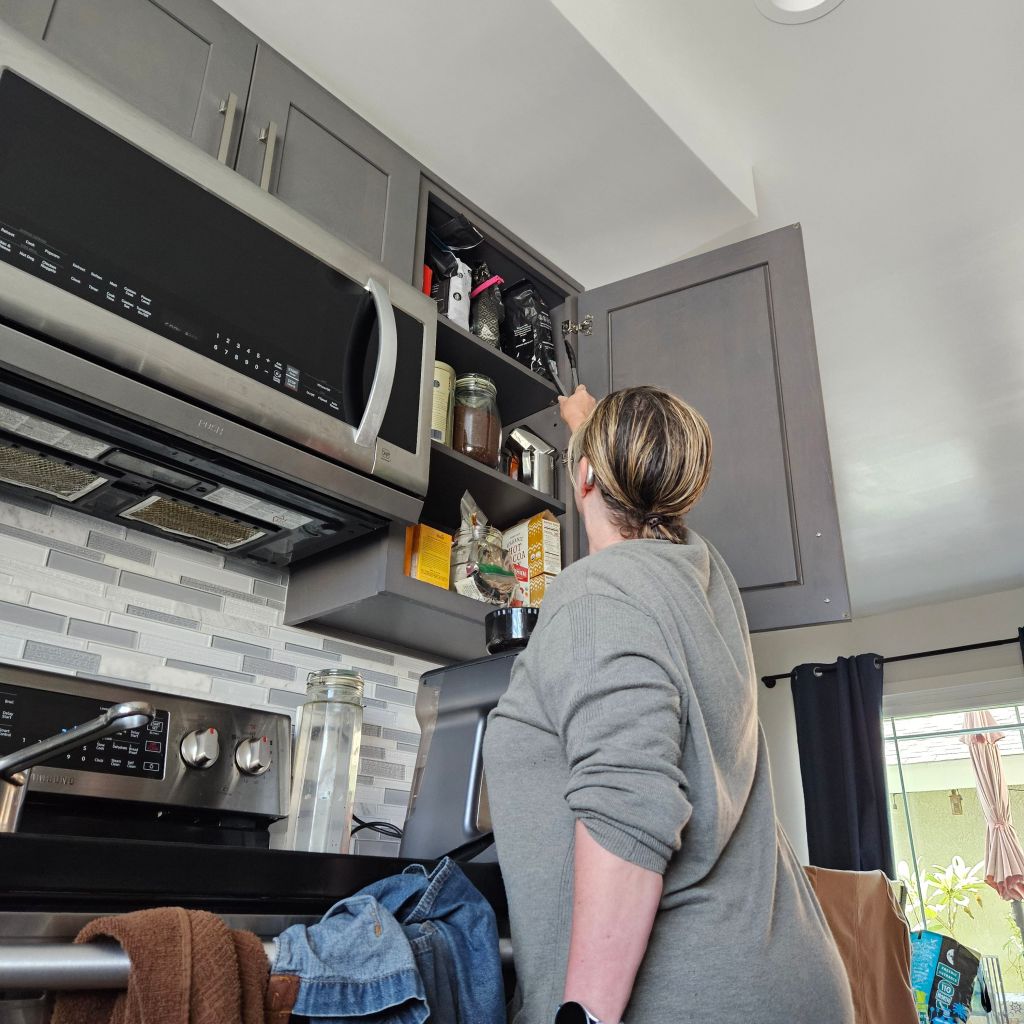
Now, my taller half prefers everything to be placed higher up. As for me? I constantly need a step stool just to reach anything. I’ve developed a rather uncanny ability to use everyday utensils to grab things from high shelves, but let’s be real—I’d much rather have everything within reach.

I always thought it was easier to bend down than to reach up, but I might have been wrong. He can never seem to find anything that’s at my eye level. Meanwhile, I’ve learned that shelves at my height are the perfect place to hide things in plain sight from him.

I really tried to compromise. I moved some everyday items to a taller shelf, but that didn’t seem to solve the problem.

Yesterday, he complained about not finding anything because I’d put all the common items on lower shelves. I reminded him, jokingly, that I’ve always been short. He didn’t have a response. Guess there’s no winning when it comes to height!

Small Changes, Big Impact – My January Resolutions.

As January 1st approaches, so do the typical New Year’s resolutions. Gyms become packed with people hoping to exercise more and lose weight, and exercise machines and gym clothes are on sale everywhere. However, not every resolution has to be a huge, overwhelming goal that is unlikely to be followed through. Instead, choose a couple of realistic ones—and maybe one big, ambitious goal for fun.

Personally, I avoid setting wild resolutions because my life is already hectic enough. But here are some simple, achievable resolutions I’m committing to for the new year ahead, focusing on my well-being and peace of mind:

As January 1st approaches, so do the typical New Year’s resolutions. Gyms become packed with people hoping to exercise more and lose weight, and exercise machines and gym clothes are on sale everywhere. However, not every resolution has to be a huge, overwhelming goal that is unlikely to be followed through. Instead, choose a couple of realistic ones—and maybe one big, ambitious goal for fun.

Personally, I avoid setting wild resolutions because my life is already hectic enough. But here are some simple, achievable resolutions I’m committing to for the new year ahead, focusing on my well-being and peace of mind:

  1. Toss out old makeup and check expiration dates.
    Beauty products can expire and become ineffective or even harmful. It’s time for a refresh!
  2. Replace those worn-out toilet cleaning brushes.
    We all know how grimy these can get. A new brush will keep things fresh!
  3. Go through your home library and donate a few books.
    Clear out books you no longer need, and pass them on to a local charity or library to give them new life.
  4. Tackle one junk drawer.
    Pick a drawer in your home, clean it out, and organize it. Small decluttering efforts make a big difference.
  5. Commit to one day a month without social media.
    Giving yourself a break from screens can improve mental health and foster more meaningful connections.
  6. Reach out to a friend you haven’t heard from in a while.
    Life can get busy, but reconnecting with old friends can be refreshing and rewarding.
  7. Meet a friend for a walk or a hike.
    Physical activity paired with quality time is a great way to bond while staying active.
  8. Update all your security settings.
    Make sure all your accounts have strong passwords, two-step authentication, and up-to-date security settings.
  9. Remember that there is life beyond work.
    Balance is key to avoiding burnout, so take time for yourself outside of your professional commitments.
  10. “Buy Flowers for Yourself Once a Week”

Flowers have a way of brightening up any space and boosting your mood. Make it a weekly habit to treat yourself to a fresh bouquet. It’s a simple, inexpensive way to bring beauty and joy into your life—plus, it’s a reminder to take care of yourself!

These resolutions are manageable and focused on improving my everyday life. Feel free to use my goals as a base and adapt to your life and I hope you’ll consider setting your own personal, achievable goals this year!

Apparently, I have a gazillion lipsticks  and o don’t even use any of these colors!

Finding time for taking time off

It is very easy to delay time off and  vacations, telling yourself you are very busy right now and postpone fun activities. God knows I have found many excuses before – I have deadlines at work, this is not the right time, it’s the end of the quarter or year and many more excuses. But when is the right time really? It seems like when we become adults with full time jobs there  is never really a right time to take  a vacation or sometimes even just a day or two off.

I know some people with unlimited PTO and  from what I hear these unlimited PTO people take the least time off. I have a limited amount of time off, it is not small at all but still limited and I get to transfer only a small amount of vacation days to the next calendar year.

Time off is important, we all need it. We need time to refresh, clear our heads and do things outside of our professional life for ourselves and our families. Weekend breaks are really not enough, at least not for me. 

Although my time off is limited to specific times during the year, times that are not flexible and do not always allow me to get the best rates for travel, I still choose to take my vacation days and have some fun. I even stopped taking my laptop with me as I learned to let go and trust my team to cover for me (this was a big issue for me as a recovering workaholic).

Something happened in the last couple of years that made clear what my priorities should be: family,  friends , health and time off for fun. Health I can’t really control but everything else I can.

I can not only make sure I take care of myself but take care of my work team as well.

And since no time off makes employees burn out, it is very important for us as not only to take care of ourselves but as leaders and managers to make sure our team gets time off as well.

I read somewhere that employees don’t quit jobs, they quit bosses. Not sure how true that is for everyone who quits, but having managers that truly care about their employees’ life balance , happiness and yes, their time off is, should be part of managing a great team.