How to Shower Wrong: A Tired Person’s Guide

Or Waterproof? Asking for My Hearing Aids.

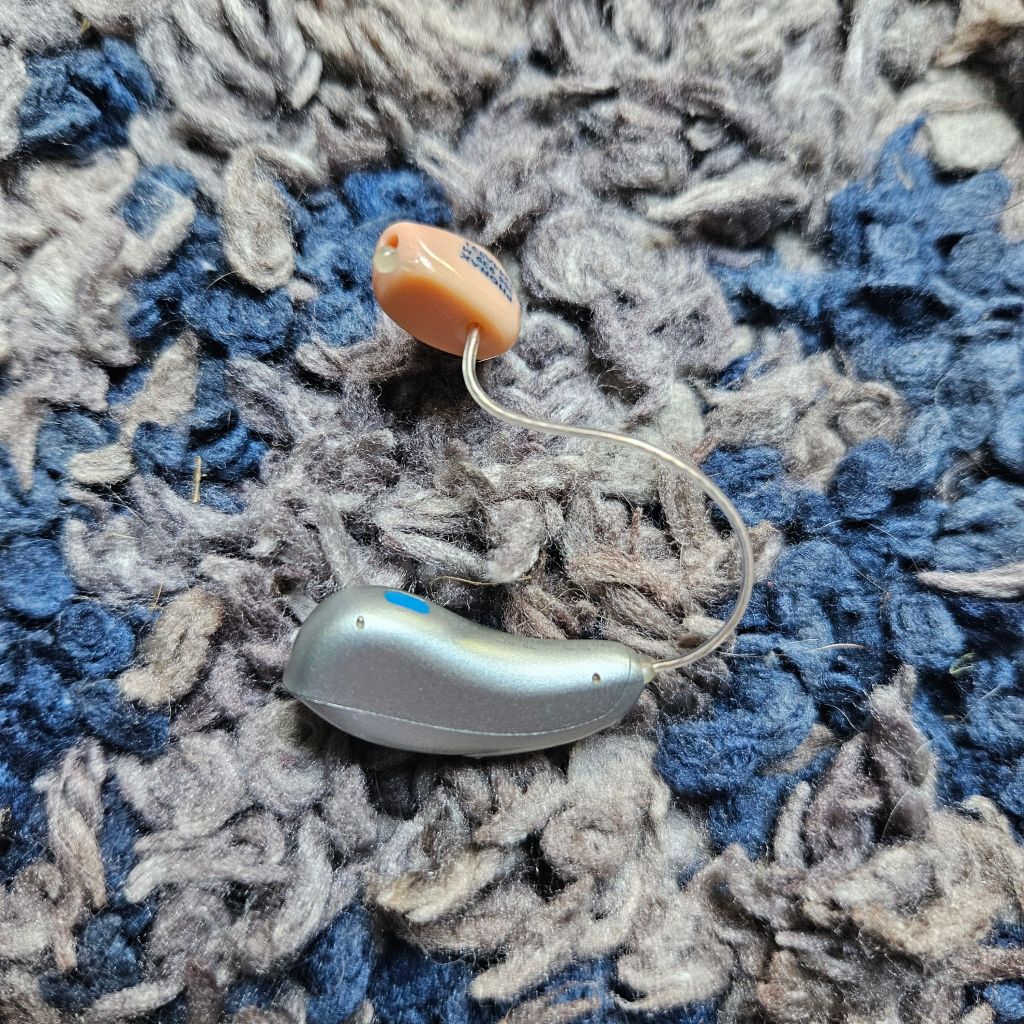
The unthinkable happened this weekend — I forgot to take my hearing aids off before getting into the shower. First time ever in five years that this has happened to me.

Hearing aids are expensive. These were my first pair, the ones I got when I first lost my hearing, and they were very expensive. Back then, we had great insurance that covered the full cost of a top-of-the-line pair. That was several insurance companies ago.

Ever since then, I’ve dreaded getting them wet or breaking them. They’re my lifeline. Usually, the first thing I do before stepping into the shower is touch my ears to make sure they’re out.

But today, I forgot.

I was tired — I hadn’t been sleeping well for the last couple of nights. The Passenger Prince had to do a 72-hour at-home EEG study, which meant a camera was set up on him at night. The camera had night vision, and that little light kept waking me up. I like complete darkness when I sleep. I thought about crashing in my home office but decided against it for the sake of comfort. Comfort that completely escaped me this weekend.

My Passenger Prince, who on a normal day would enjoy me running out of the shower naked, was not thrilled with my sprint this time. As soon as I noticed my aids still in my ears, I bolted out of the shower to dry them off — dripping water all over the bathroom and the laminate floor in our bathroom.

Maybe tonight I’ll finally sleep.

Broken Hearing Aid? Worse—A Broken Ear

The Only Thing Scarier Than a Broken Hearing Aid

There is nothing more frightening to a hearing aid wearer than a broken hearing aid—or so I thought.

Yesterday, I had severe issues with my hearing aid. I couldn’t hear anything in my left ear. I kept adjusting the settings, raising and lowering the volume. I deleted the app on my phone, reinstalled it—nothing worked.

When my hearing aid doesn’t function, I can always tell. Besides the obvious issue of not being able to hear, my tinnitus gets noticeably worse.

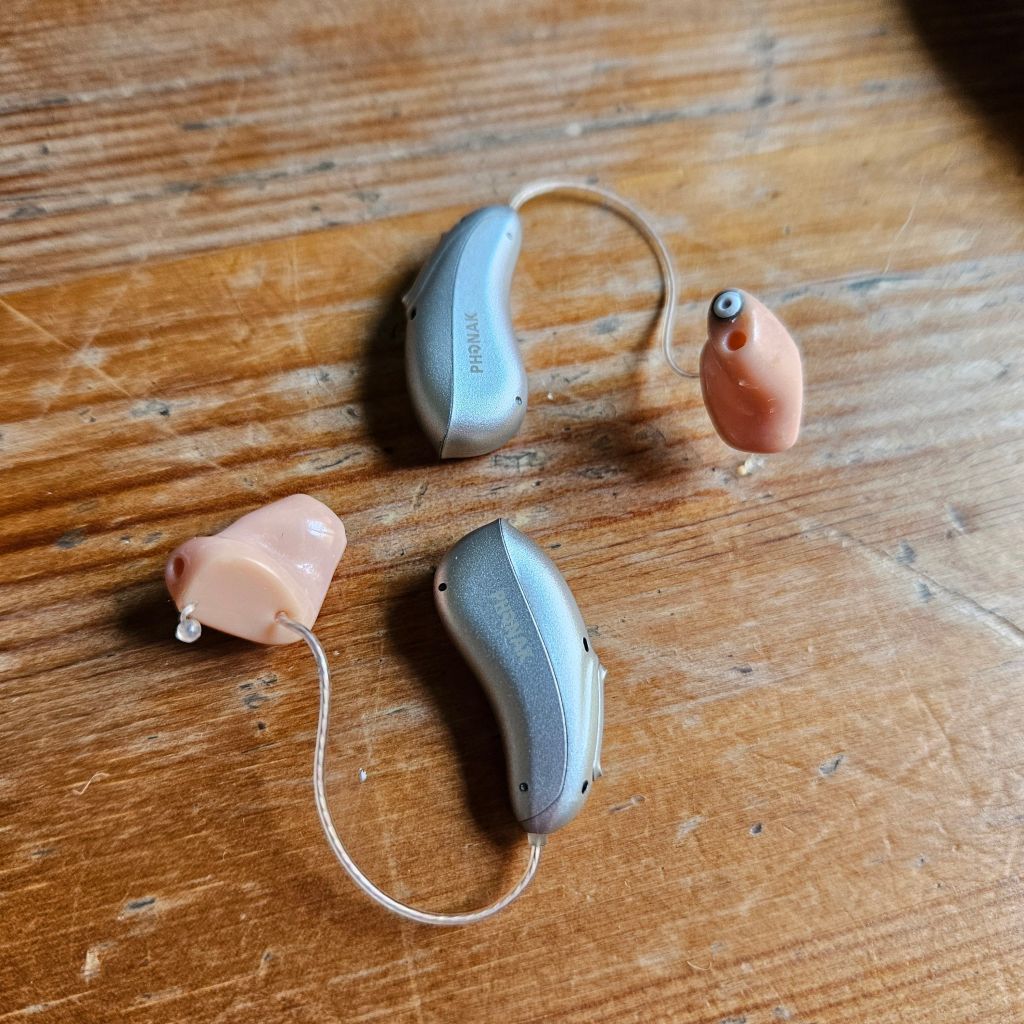
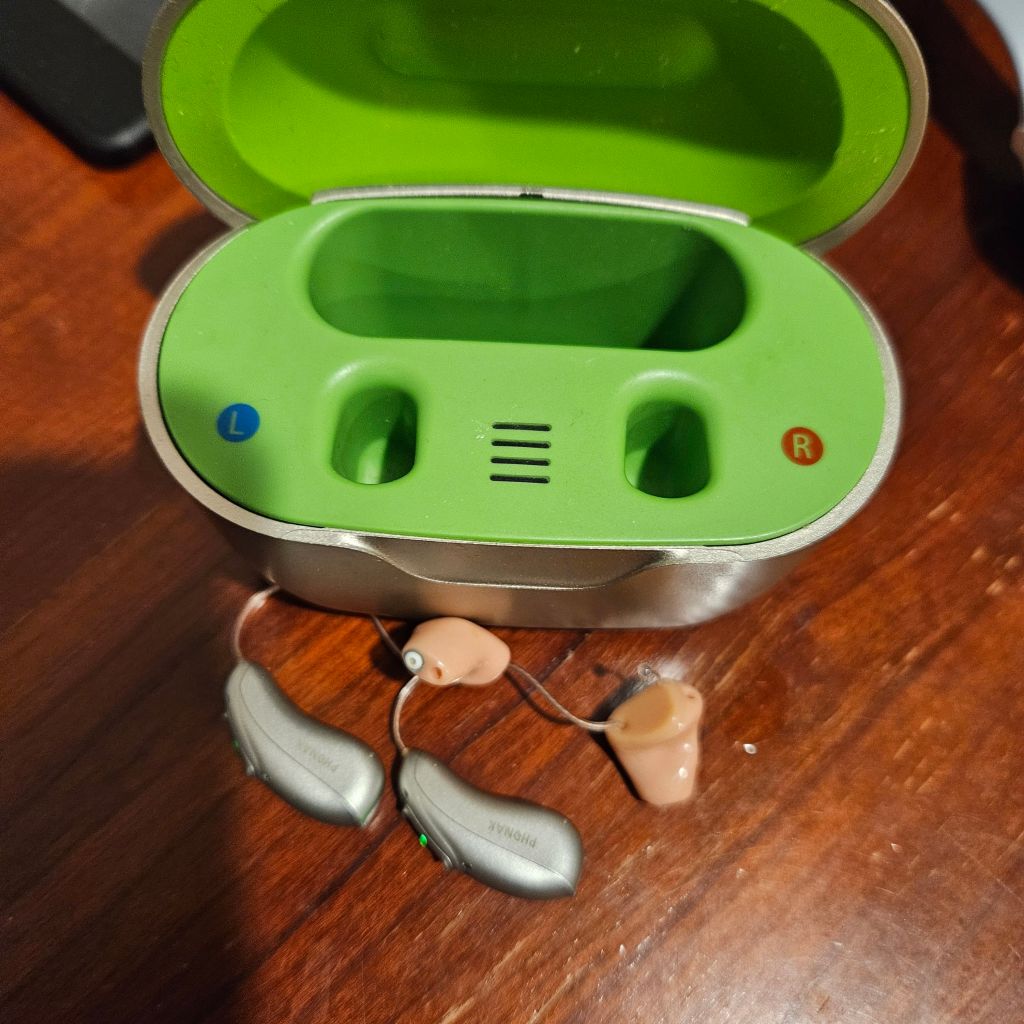
I tried everything: turned the hearing aid off and on, charged it fully, even put in my old hearing aid. That’s when I realized—it wasn’t the hearing aid that was broken. It was my ear.

I had lost all hearing in my left ear.

And that is even scarier than a malfunctioning device. A hearing aid can be fixed. A non-functioning ear? That’s a different issue altogether. Sometimes, even the best technology money can buy isn’t enough.

After that realization, I made an urgent phone call to my audiologist and scheduled a dreaded appointment. Then, I made the mistake of checking with Dr. Google—and that was not a good idea. Dr. Google is very scary.

Work today was a challenge. Not being able to converse or understand what people are saying to you is incredibly isolating. But my coworkers were understanding. They adapted things so I could still work, and I really appreciated that.

Today was not a good day.
I hope tomorrow will be better.

#hearingloss #brokenhearingaid #toughday #phonak

Hearing Aids, Stigma, and My Story

Hearing Aids, Stigma, and My Story

I had an interesting conversation with my mother the other day. She told me about a friend she met for coffee, who mentioned that her husband refuses to wear hearing aids. Apparently, his doctor told him that wearing hearing aids would hurt his brain.

I’m not sure which doctor he saw—because even “Doctor Google” isn’t that misinformed.

I told my mom that he probably doesn’t want to wear them either because of the cost or because of the stigma. For many people, hearing aids still carry the perception that they make you look old. I wear hearing aids myself. I’ve worn them for the past five years, ever since I lost my hearing overnight. I don’t think I’m old—but I guess that depends on who you ask.

When I lost my hearing, it took a few months for my insurance to approve the hearing aids. They’re expensive, and since I have severe hearing loss in one ear and moderate loss in the other, I needed high-quality aids—not the over-the-counter ones. The first pair I got cost nearly $6,000, but I was very lucky: insurance covered the full amount.

I completely understand people’s hesitation when it comes to the cost. Hearing aids are expensive, and the technology changes—and thankfully improves—each year. But for many adults, cost isn’t the only issue. There’s also a stigma. Some people see hearing aids as a sign of aging or weakness. And yes, it’s true that we lose some hearing as we get older. But that’s not the case for everyone.

In my case, my hearing loss was sudden. My ENT told me it was likely caused by a virus that attacked my system. One day, I could hear everything around me. The next day, my world went silent. My life changed forever.

Thankfully, hearing aid technology is incredible now. The devices are smaller, more advanced, and some even come in fun colors. I will never hear “normally” again, and I’ll always need hearing aids to stay productive and connected. But I wear them proudly.

If you’re struggling with hearing loss, don’t let fear, shame, or stigma stop you from getting the help you need. There’s nothing weak or “old” about using technology that helps you live your life fully.

#HearingLoss #SuddenHearingLoss #HardOfHearing #HearingAids #MyHearingJourney #HearingAidUser #BreakTheStigma #LifeWithHearingLoss #DisabilityAwareness

The Mourning We Don’t Talk About

In life, we mourn many things—not always death.

I’ve mourned my celiac diagnosis, my sudden hearing loss, and most recently, a friendship of nearly 30 years that quietly came to an end.

When I was first diagnosed with celiac disease, I mourned my freedom. The freedom to eat without fear, without reading every label, without scanning menus for hidden gluten. Back then, gluten-free options were scarce, and most of them tasted awful. I remember walking through Costco and crying, realizing there was nothing I could buy there ever again. That moment stayed with me. It took a long time to adjust to this new reality—20 years later, I still feel that sense of loss sometimes.

When I lost my hearing overnight, I mourned again—this time with fear. Fear of navigating life without a major sense, one that’s crucial for safety, for work, for connecting with others. I’m now five years into living with hearing loss, and some days are still hard. Crowded spaces overwhelm me. Conversations at parties are nearly impossible. I’ve become even more of an introvert, not by choice, but by necessity.

And this past year, I’ve been mourning a friendship. A nearly 30-year bond with someone I once considered a true friend. The kind of friend you shop with, laugh with, lean on. The one who would’ve helped me pick a dress for my daughter’s wedding, told me the truth in the fitting room, and listened when I needed to vent. She would have been there—and I would’ve done the same for her.

I have other friends. Good friends. But that doesn’t erase the ache of letting go of someone who once held a permanent place in your life.

Grief comes in many forms. And like any loss, it moves in stages. Maybe I’ve reached the final one. Maybe I’m at acceptance.

Or maybe I’m just learning that some grief never really ends—it just changes shape.

Five Years After Hearing Loss: The Things No One Told Me About Hearing Aids

Junk Drawer Finds and Hearing Aid Memories

I was clearing out one of my many junk drawers as part of my 2025 clutter mission when I found the receipt for my first hearing aid. It instantly brought back everything I went through that year.

From the moment I realized that I really couldn’t hear—and that it wasn’t temporary—to finally accepting that I needed hearing aids just to get through everyday life. I stressed constantly about how I’d manage at work and even more about the cost of the devices.

It took months of back-and-forth with insurance to get them covered. Then came the “test-driving” phase, followed by several more months of getting used to the new sounds and training my brain to adapt.

What they don’t tell you is that the world is loud. And they definitely don’t tell you that hearing aids won’t restore your hearing to what it once was.

I learned that loud places are overwhelming, movie theaters are actual punishment, and despite all the technology available, I still won’t be able to follow every conversation. It hit me hard—so hard that I spiraled into depression and grief.

And people… well, some people are completely clueless. One of my favorite comments (read: least favorite) was:
“But you don’t look deaf.”
Apparently, I forgot to wear my antennas that day.

Another time, I asked someone to repeat what they said because I didn’t hear them, and they responded by leaning in and yelling directly into my ear. The shock on my husband’s and my face must have been priceless.

Now, five years and a second hearing aid later, I’m still adjusting. Still learning to live with the fact that I’ll never hear “normally” again.

I wonder what I’ll find next week when I tackle another junk drawer. Hopefully something better—like forgotten money from a year ago.

#hearing loss journey #adjusting to hearing aids #living with hearing loss

#hearing aid struggles #hearing loss depression

Guaranteed to Raise Your Blood Pressure—Just Add Customer Service

My cardiologist told me that I need to lower my blood pressure.
I would love to do that—sadly, there’s no magic button or app on my phone that can make it happen.

I work in customer service, and let me tell you: working in customer service is practically a guarantee that your blood pressure will be high. It might as well come with a sticker that says “100% Guaranteed.”

Customer-facing jobs have never been easy or appreciated much. You need a strong personality to last in them. Apparently, I have one—I’ve been in this industry for over thirty years.

This week, our phones were out for a day due to a VOIP outage. Honestly, it was kind of great for a few hours… until they started working again. Then the ringing didn’t stop.

Technically, not a problem. But the first call I was lucky enough to answer?

No greeting. No polite chit chat. I was immediately yelled at.

I asked the customer to explain the issue, and she just kept yelling. I asked again, politely, but she continued, yelling about a conversation she’d had with someone else in the office—five days ago.

I tried to stop her to ask her name (which she never gave me, too busy yelling), and I explained I couldn’t continue a conversation I wasn’t part of. That only made her yell louder.

I wear hearing aids, so yelling on the phone goes straight to my ears—and it hurts. I asked her kindly to stop yelling. She didn’t. She just hung up.

I’ve been yelled at by customers before—this wasn’t new to me or my blood pressure. But I’m always perplexed when people think yelling or being rude will help them get better service.

In my experience, kindness goes a long way.

To my cardiologist’s chagrin—and my blood pressure’s detriment—I’m still here at my job. And I can’t wait for the next person to raise it.

#CustomerServiceLife #YouCantMakeThisUp #behindtheadmindesk #customerservicestories

Bread Trucks and Blood Pressure: Finding Humor in Life’s Challenges

funny. You see, I’m a Celiac — I can’t eat gluten because of an autoimmune disease. I was diagnosed with it as a “birthday gift” on my 39th birthday, and as a former carb-lover, giving up bread and pasta wasn’t easy. Back in the day, gluten-free options were hard to come by and, frankly, not very tasty. And, let’s be honest, gluten-free bread is still the size of a postage stamp.

Life these days is hectic, crazy, and sometimes full of stress. Lately, work has only made it worse. My cardiologist told me I need to lower my blood pressure. I asked him how to do that when people around me constantly annoy me and drive me crazy. I’m still waiting for a solid answer to that question.

I try not to take everything too seriously — not because I think life is a joke, but because we’re all dealing with serious things. We need to find humor in what surrounds us. Unfortunately, that doesn’t seem to help much with my blood pressure.

Losing my hearing was tough. I went through the stages of grief because losing such an important sense impacts my quality of life and everyday well-being. But five years later, when people ask how it affects me, I joke that it’s actually a blessing for my husband — I don’t hear any of his annoying remarks anymore.

So, having a bread truck full of gluten following me around was pretty funny. Who knows, maybe it’ll even show up in my dreams tonight.

#GlutenFreeHumor #CeliacLife #FindingTheFunny #LaughThroughTheStruggles
#CeliacWarrior #HealthWithHumor #BreadTruckChronicles #AutoimmuneLife #GlutenFreeJourney #StressAndLaughter

“Still Deaf, Still Together: Navigating Marriage with Hearing Loss”

Had a Great Conversation with My Husband

This morning, I had a great conversation with my husband. I was still lying in bed, while he was getting dressed in the walk-in closet. What made this conversation truly memorable, however, was that I was without my hearing aids. He was talking to me from beyond a wall, and I could only hear sounds, not words—kind of like the Charlie Brown cartoons, where all you hear is noise instead of actual speech.

I kept telling him I didn’t have my hearing aids in yet, but apparently, even with his excellent hearing, he couldn’t hear me. So, when he finally came into the room, I calmly looked at him and said, “You know, I’m still deaf.”

With my hearing aids in, I can hear quite well, but there are still limitations. I can’t hear well from the other side of the house, or beyond walls, and occasionally, in a noisy room or crowd, I can get a bit lost. I can usually follow most conversations, and my brain fills in the gaps for what I miss. But there have been times when my brain got it wrong, and I completely misunderstood what was being said—or agreed to something I would never have if I had heard the conversation clearly. Thankfully, nothing I agreed to in those moments was anything too crazy.

My hearing loss is not new to my husband. He was there when I lost my hearing overnight, four and a half years ago. He stood by me when I was scared about navigating a hearing world, feeling overwhelmed at social gatherings because I couldn’t understand what people were saying. He was there when I fought with our health insurance company to get my hearing aids covered and when I had to adapt my entire life to my new reality without a crucial sense.

Yet, despite all of this, my husband—who’s been with me through every step of this journey—still sometimes forgets that I can’t hear a thing without my hearing aids. It can be frustrating in a marriage, but luckily for him, I have a sense of humor (most of the time).

Maybe it’s because I lost my hearing that we’re still together after almost thirty-five years. After all, I don’t always hear what he says—the good or the bad.

#HearingLoss

#HearingAids

#Deafness

#MarriageJourney

#LivingWithDisability

#HearingLossAwareness

#DisabilityAndLove

#HearingImpairment

#LifeWithHearingLoss

#LoveAndLoss

#DeafAndProud

#HearingChallenges

The Importance of Patient Communication in Healthcare.

Or Bruised, Bandaged and Ignored!

This morning, I had my routine monthly blood tests. I get these quite often and know my body—and my veins, which are sometimes tricky. When I arrived at my appointment, I noticed a new phlebotomist. As usual, I explained that my veins tend to roll and that one side is better for drawing blood.

Unfortunately, my advice went unheard. Not only did he overlook my concerns about my veins, but he also failed to address my need for clear communication. I had told him that I am hard of hearing and need him to speak directly to me instead of turning his back.

I work in a fast-paced customer service job, speaking with many people every day. At the end of a long day, all I want is to remove my hearing aids and enjoy the silence. Having spent most of my life in customer service, I understand the challenges of balancing customer demands with providing quality service. But I also know that true service goes beyond just hearing; it’s about truly listening.

Dealing with an invisible disability comes with unique challenges. Listening to people costs nothing but can make a huge difference. Today’s experience highlighted a gap in how some service providers train their staff—not just in technical skills, but in valuing patients as individuals. It felt as though I was just another patient being processed through a conveyor belt.

By the time I left, both of my arms were sore, bruised, and bandaged. But what left the deepest mark was the feeling of being ignored.

Adapting to Hearing Loss: My Personal Journey

At my last Pilates class, my instructor told me that I am quick to follow directions. I didn’t think much of it at first—after all, I’m naturally fast. But as I reflected on it, I realized that my speed isn’t about being prepared. It’s because I can’t hear.

You’d think that losing my hearing, wearing hearing aids, and not enjoying background music in a class would make me slower to follow directions. In fact, it’s the opposite.

I suffer from SSHL, or sudden sensorineural hearing loss, which took away my hearing almost overnight in 2020. It happened during the height of the pandemic, and securing an in-person doctor’s appointment was difficult. By the time I saw an ENT, my hearing loss was permanent.

Losing my hearing isn’t just about the absence of sound; it involves my brain, too. Comprehending what’s being told to me, processing information, and responding appropriately all require more effort and concentration than they did before.

We all cope with losing a vital sense in different ways. Some retreat into themselves, others embrace their new reality, and some, like me, find ways to adapt. After the shock wore off and I realized that my life would never be the same, depression set in. I was consumed with fear about how I would continue living. It’s hard to work in customer service when you can’t hear what people are saying, especially when masks and barriers were mandatory.

At first, I avoided crowds, restaurants, and most social interactions. I thought I was doing the right thing, but in reality, I was isolating myself. As an introvert, I found it strangely comforting to be alone. But then I realized I still enjoyed being around people. So, I developed a kind of “superpower”—anticipating what people were about to say or do. Not being able to hear forced me to watch and observe. I learned to read body language, facial expressions, and subtle cues. In noisy environments, I became a silent observer, finding the smallest gestures fascinating and, oddly enough, entertaining.

When my Pilates instructor complimented me on my quickness, I just smiled. People don’t need to know that my brain is constantly processing, predicting, and observing. It’s my way of adapting to a world I can no longer hear in the same way.

We all have our coping mechanisms, this is mine and I hope that everyone finds their own way.