Broken Hearing Aid? Worse—A Broken Ear

The Only Thing Scarier Than a Broken Hearing Aid

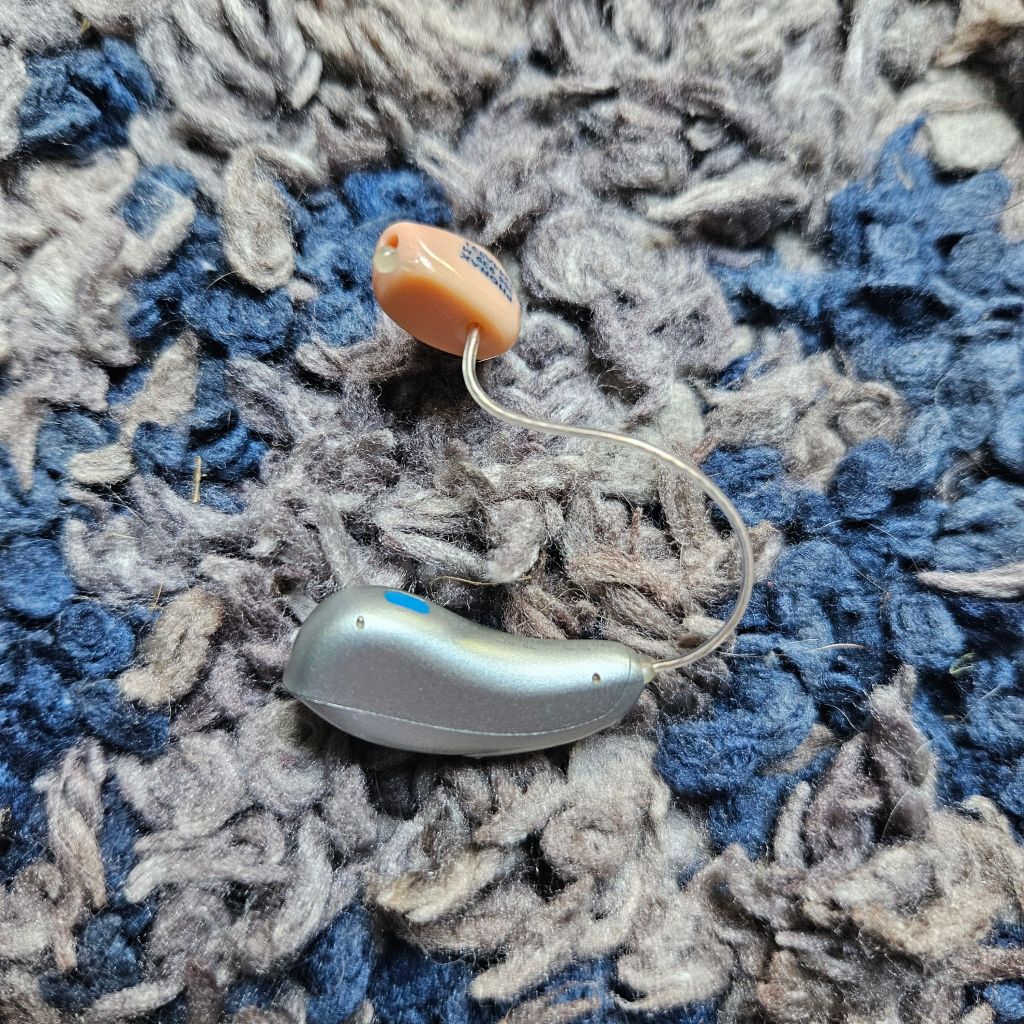
There is nothing more frightening to a hearing aid wearer than a broken hearing aid—or so I thought.

Yesterday, I had severe issues with my hearing aid. I couldn’t hear anything in my left ear. I kept adjusting the settings, raising and lowering the volume. I deleted the app on my phone, reinstalled it—nothing worked.

When my hearing aid doesn’t function, I can always tell. Besides the obvious issue of not being able to hear, my tinnitus gets noticeably worse.

I tried everything: turned the hearing aid off and on, charged it fully, even put in my old hearing aid. That’s when I realized—it wasn’t the hearing aid that was broken. It was my ear.

I had lost all hearing in my left ear.

And that is even scarier than a malfunctioning device. A hearing aid can be fixed. A non-functioning ear? That’s a different issue altogether. Sometimes, even the best technology money can buy isn’t enough.

After that realization, I made an urgent phone call to my audiologist and scheduled a dreaded appointment. Then, I made the mistake of checking with Dr. Google—and that was not a good idea. Dr. Google is very scary.

Work today was a challenge. Not being able to converse or understand what people are saying to you is incredibly isolating. But my coworkers were understanding. They adapted things so I could still work, and I really appreciated that.

Today was not a good day.
I hope tomorrow will be better.

#hearingloss #brokenhearingaid #toughday #phonak
Adapting to Hearing Loss: My Personal Journey

At my last Pilates class, my instructor told me that I am quick to follow directions. I didn’t think much of it at first—after all, I’m naturally fast. But as I reflected on it, I realized that my speed isn’t about being prepared. It’s because I can’t hear.

You’d think that losing my hearing, wearing hearing aids, and not enjoying background music in a class would make me slower to follow directions. In fact, it’s the opposite.

I suffer from SSHL, or sudden sensorineural hearing loss, which took away my hearing almost overnight in 2020. It happened during the height of the pandemic, and securing an in-person doctor’s appointment was difficult. By the time I saw an ENT, my hearing loss was permanent.

Losing my hearing isn’t just about the absence of sound; it involves my brain, too. Comprehending what’s being told to me, processing information, and responding appropriately all require more effort and concentration than they did before.

We all cope with losing a vital sense in different ways. Some retreat into themselves, others embrace their new reality, and some, like me, find ways to adapt. After the shock wore off and I realized that my life would never be the same, depression set in. I was consumed with fear about how I would continue living. It’s hard to work in customer service when you can’t hear what people are saying, especially when masks and barriers were mandatory.

At first, I avoided crowds, restaurants, and most social interactions. I thought I was doing the right thing, but in reality, I was isolating myself. As an introvert, I found it strangely comforting to be alone. But then I realized I still enjoyed being around people. So, I developed a kind of “superpower”—anticipating what people were about to say or do. Not being able to hear forced me to watch and observe. I learned to read body language, facial expressions, and subtle cues. In noisy environments, I became a silent observer, finding the smallest gestures fascinating and, oddly enough, entertaining.

When my Pilates instructor complimented me on my quickness, I just smiled. People don’t need to know that my brain is constantly processing, predicting, and observing. It’s my way of adapting to a world I can no longer hear in the same way.

We all have our coping mechanisms, this is mine and I hope that everyone finds their own way.