Adapting to Hearing Loss: My Personal Journey

At my last Pilates class, my instructor told me that I am quick to follow directions. I didn’t think much of it at first—after all, I’m naturally fast. But as I reflected on it, I realized that my speed isn’t about being prepared. It’s because I can’t hear.

You’d think that losing my hearing, wearing hearing aids, and not enjoying background music in a class would make me slower to follow directions. In fact, it’s the opposite.

I suffer from SSHL, or sudden sensorineural hearing loss, which took away my hearing almost overnight in 2020. It happened during the height of the pandemic, and securing an in-person doctor’s appointment was difficult. By the time I saw an ENT, my hearing loss was permanent.

Losing my hearing isn’t just about the absence of sound; it involves my brain, too. Comprehending what’s being told to me, processing information, and responding appropriately all require more effort and concentration than they did before.

We all cope with losing a vital sense in different ways. Some retreat into themselves, others embrace their new reality, and some, like me, find ways to adapt. After the shock wore off and I realized that my life would never be the same, depression set in. I was consumed with fear about how I would continue living. It’s hard to work in customer service when you can’t hear what people are saying, especially when masks and barriers were mandatory.

At first, I avoided crowds, restaurants, and most social interactions. I thought I was doing the right thing, but in reality, I was isolating myself. As an introvert, I found it strangely comforting to be alone. But then I realized I still enjoyed being around people. So, I developed a kind of “superpower”—anticipating what people were about to say or do. Not being able to hear forced me to watch and observe. I learned to read body language, facial expressions, and subtle cues. In noisy environments, I became a silent observer, finding the smallest gestures fascinating and, oddly enough, entertaining.

When my Pilates instructor complimented me on my quickness, I just smiled. People don’t need to know that my brain is constantly processing, predicting, and observing. It’s my way of adapting to a world I can no longer hear in the same way.

We all have our coping mechanisms, this is mine and I hope that everyone finds their own way.

Living With Grief After Losing a Beloved Dog

We lost our dog this past July, and the shock still lingers. She was young and seemingly healthy, so her sudden passing took us all by surprise. One day, she was her lively self, barking at the Amazon truck, and the next, we found ourselves at the emergency vet.

Our grief has been profound, especially since not everyone in the family got to say goodbye. She had regular check-ups, medication, and pet insurance, so we never expected this outcome. Each of us is grieving in our own way; there’s no manual for it. My youngest and I finally put away her crate, toys, and dog bed, saying our final goodbyes to her space in our home. Other family members chose a toy to keep as a memento. As for me, I find myself somewhere in between.

While the house is now free of her toys, my car still holds her presence—her nose prints on the back windows remain, offering a bittersweet comfort every time I get in.

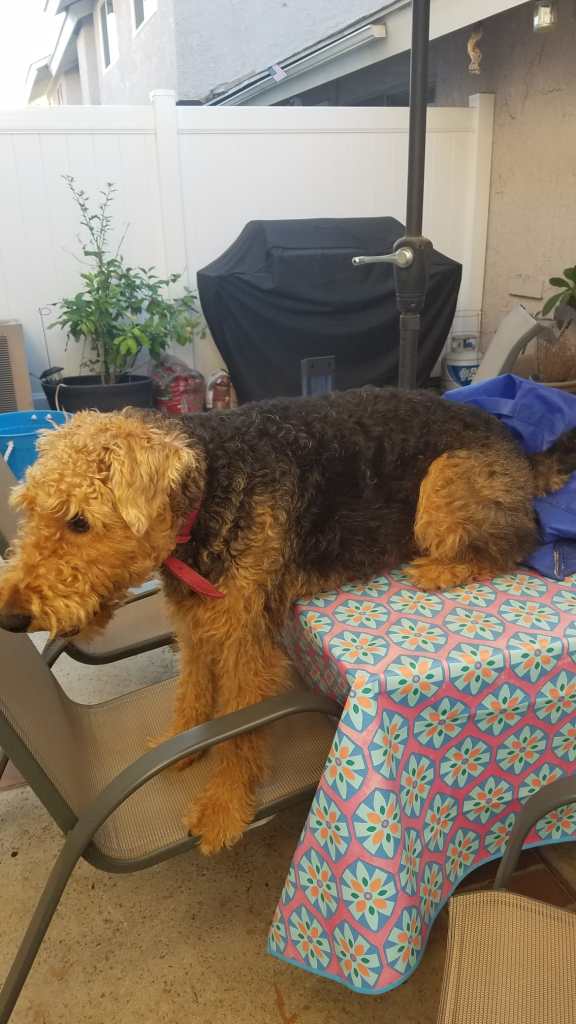
I’ve been asked if I’ll get another dog. I probably will, but not yet. I’m not ready for the final goodbye and the full letting go. She was my companion for seven years, a mirror to my feelings, and a source of comfort when I lost my hearing.

We cherish the wonderful memories of her life filled with walks, treats, and endless love. She is missed every day. I’m almost ready to let go, but not quite—just lingering in that space of grief. It truly is a funny thing.

When Employees Feel Unheard

There is nothing worse than feeling unheard at your workplace. It makes you feel invisible, like just another cog in the machine. Each year, you receive an anonymous survey where you are supposed to express your concerns in hopes of being heard. Yet, year after year, nothing changes.

We all experience this feeling, whether we work in a large corporation or a small family-run business. We have good ideas that could benefit the company, yet they often go ignored. Worse still, when we alert management about misbehavior or processes that harm employees and create unnecessary work, we are dismissed or told we are wrong.

When it’s just you, it’s easy to question your own perceptions. However, when multiple employees share similar feelings, it becomes clear that there may be validity in those concerns. Granted, employers are not obligated to heed employees’ suggestions, even when they are valid. Both big corporations and small family-owned businesses typically owe employees little more than a salary—at least, that’s how many of us feel.

Feeling unheard leads to feelings of unappreciation, which do not simply vanish. Instead, they foster resentment and unhappiness with our jobs. We begin to question our motivations for working, prompting us to dust off that old resume and update it. On a particularly bad day, we might even tweak our LinkedIn profiles and browse job boards. When just one employee feels this way, the company might not notice. But when multiple employees feel unheard and unhappy, the company faces a significant problem.

In a workplace suffering from corporate deafness, can anything be done? Probably. The real question is whether anyone is willing to listen and act on employee feedback. One part of the solution lies in training: equipping managers to be effective leaders who genuinely pay attention to their employees. This is fixable if there is the will to make it happen.

Another challenge arises when management is indifferent—whether because they believe the current economic climate means no one will leave, or because a manager feels untouchable as part of the family business. Some companies simply do not care, assuming they can always hire someone new. While it’s true that we are all replaceable, this mindset overlooks the costs involved. Training new employees takes time and money, and high turnover leads to inefficiency and inconsistency in work. Ultimately, management should care.

Can you force anyone to listen or to care? No. However, when undervalued employees reach their breaking point, they may simply choose to leave, taking their knowledge and great ideas with them.

Navigating Career Transitions in Your Late Fifties – Practical Guidance

My husband was laid off recently as part of these big high tech layoffs that they call employment reductions. The stock market loved it as the company’s stocks jumped up. Our family did  not  love it so much!

It was not a surprise, we did see it coming. Each week a different division was closed and emails started bouncing back from those laid off. So we planned the best that we could, prepared for the worst but yet, still hoped for the best.

Fortunately for us, all our kids graduated college, our house is almost paid off and our finances are all set. Working in the high tech industry forces you to plan, we saw the highs and the lows and went through two previous layoffs. Luckily I work in a stable industry and have a relatively good health plan, not as good or as subsidized as the high tech company one, but still affordable.

So technically, we are ok. However we are at a different point in our lives, we are in our late fifties, not really looking for a new career, just looking for something that will carry him over for the next ten years until real retirement. But it is not easy, looking for a job in your late fifties, early sixties has its own challenges.

With the years of experience you have, the over qualification is a challenge. Age discrimination is another challenge, having an insecure interviewer who does not like to see anyone with “too Much” experience and  the biggest problem is when you yourself have no real idea of what you want to do. As part of my husband’s severance package he had career counseling. They recommended removing so many things from his resume- dates, so no one can figure out how old he is. Remove  older jobs, so his resume will not be a million pages long, support group for the newly unemployed that only made him more depressed as everyone sounded miserable and unhappy about not being able to find a new job.

Finding yourself and your passion is not easy when you have one eye set on retirement , on the one hand you still need an income and might not be looking for a 20 year career and even if you are, whoever is looking to hire is thinking the same, this person is not worth investment as he or she  will probably retire soon anyway. 

And as much as I am a firm believer that you need to reinvent yourself every ten years, not everyone is capable of doing so. When we are employed, we get set in our ways and are comfortable in the way everything is going so that we don’t always look for the next phase, especially for our generation. We need to step outside of our comfort zone and plan a little. We must continually invest in ourselves, learn new skills,  update our resumes every six months, check job  posts every couple of months, continually network with our peers and keep up with changes in the employment sectors as there are no guarantees. On the other hand, planning a rainy day fund, adjusting it as needed to whatever stage in life we are so big surprised, do not catch as un ready as much as we can.

My husband’s new path is still unclear and it is definitely not easy for him emotionally, but he has not given up yet. For now, I shall enjoy having a house husband!

Nothing makes sense

What happens when you lose your hearing? Do you suddenly get a superpower ? A brand new sense or an enhanced one. They say that when you lose a sense, another sense gets stronger to compensate. When I lost my hearing there were no sudden bells, whistles or trumpets announcing my new strengthened alternate sense. Most likely because I could not hear them.   Nothing exciting happened, I did not become spiderman and the only superpower I got was the on and off button on my hearing aids. Hence my lovely pair of hearing aids, nice expensive silver colored. Not even a fun blue color to match my eyes.

My sense of smell did increase slightly  but I am not sure that this is a good thing considering I have a dog and a grand dog.  While I did loose a major sense I did gain observation, not by choice but by necessity. Since I can’t always follow a conversation I started to pay more attention to facial expressions and body language. You learn a lot from watching people and standing on the sidelines. In big crowds and noisy places it is very hard for me to hear, so standing on the sidelines was out of practicality. You see if someone is uncomfortable, happy, deceptive and you start getting a sense of what they actually think and feel from their body language. For me it is still a work in progress to understand everything I see but this is a welcome challenge and a it is little entertaining.

You also learn a lot from looking at people’s faces when they speak to you, surprisingly many are not comfortable with people looking at them directly. Might be that eye contact with humans was lost during the pandemic zoom era. But as a hearing impaired person it is a valuable tool as I am learning to read lips.

My husband would say that despite my new observation skills I still do not pay attention to what he says, but in all fairness I didn’t pay attention before I lost my hearing so technically it’s a habit and not a choice and maybe a tiny superpower. I took me 35 years together to perfect this skill.

Benchmarks or how I became a prune.

A year and a half ago I broke my foot, it was completely my fault as instead of looking where I was going, my eyes were glued to my cell phone and I stepped down a step straight onto my dog’s 3 pronged nylabone and lost my balance. Completely avoidable!

Showering was not fun with a broken foot as I needed to sit in a chair in the shower and where the chair could be positioned meant I could not reach the on/off valve. I am after all  what some people call “fun size” or vertically challenged. That meant that my husband had to be around and turn the water off for me. And here lies the problem, he forgot me. He sometimes had to answer work calls or someone pinged him on teams and he just forgot me. He claims he really did not forget, he was just getting around to it, really. While I was sitting in the shower with the water all over me I considered adding a middle name , Prune. You would think that sitting in the warm water is nice, it is, to a point. I managed, god knows how, to get up on one functioning leg, turn off the faucet and get out of the shower while maneuvering the chair to do this. Surprisingly I did not break any other bones in my body or the shower glass door on my way out. There is something to be said about being short in a tall world, I learned tricks and ways to reach.

We  are finally  remodeling our shower, a shower that is just slightly younger than me but in many ways is stronger than me. After we agreed to compromise and my husband compromised in letting me choose whatever weird tile I wanted, the topic of adding a bench or shelf came up. My husband suggested a bench so the next time I break my foot we will not need to use a chair. My response was, thank you for the vote of confidence but why would you think I am planning on breaking my foot or anything else again? Quiet.

After a while he expanded that we might need to add some support fixtures in the future so a bench is a good idea. Now, it is a good idea as I will be able to put the shampoos and shower stuff nicely on this bench, not exactly what he meant. He suggested we put the bench on one side of the shower and could not understand what my issue was. I explained again that I am short with a very small wing span and will not be able to reach the valve from the bench. Apparently after being together 35 years he never noticed that I am a head and a half shorter than him. 

We are currently at a stand still about this great bench, it will be another bench mark in our ongoing relationship. 

Made my 1st online sale

I made my first sale on poshmark yesterday and I was very excited, no I am not endorsing poshmark and I will not be retiring any time soon. The reason I am excited is that I’m finally moving extra clothes I do not need or have ever used out of my house, decluttering and making a couple of bucks in the process.

Cleaning your closet is an emotional process, at least for me.  It is the process of learning to let go and actually letting go. I have clothes in sizes that will not fit me again any time soon. I kept telling myself that I will use them in the future once I lose some weight , but in reality I was afraid to admit that my body has changed and that is ok.And in reality when and if I will need smaller size clothes I can always buy more.

The other items  I am letting go off are all the great deals I got during the pandemic and boy there were really good deals, such good deals that they were never worn and still have tags on them. Shopping online was very dangerous back then, we got constant deals and free stuff. The 

the only problem with all the good deals was that I did not need them. Like many of us I worked remote and meetings were on zoom and there was no real need for dresses, dress pants or blouses. But like other people I justified it with “ I will use it when we get back to the office” , I was over optimistic. I have yet to use 80% of the items I bought and now I am sending them on a journey to a better home and in the process making enough money for a sushi dinner.

When you had enough

I quit my previous job after almost five years many years ago.  I quit without notice and I did not even  give my employer at the time the courtesy of two week’s notice. I was burned out, working in a toxic workplace that had me having PTSD every text message I received from the owner. I saw the owner and his wife several weeks after I quit and had such a big panic attack and that just proved to me how terrible this workplace was.I liked my work, it was fun and challenging. I didn’t like the owner, his ethics and his work practices and definitely did not like the fact that his personal life with ex wife and second wife kept spilling to the workplace and got me stuck in between quite frequently. But as I returned to the workforce after many years as a stay at home mom, my choices were limited and I needed work experience on my resume. Employers looked at my volunteer experience and said great and ignored it.Me quitting without notice was way before the great resignation of the last two years, some employers and workplaces were toxic even before. There have been many articles lately about how you need to quit “nicely”, give your employer transition time and maybe get a good reference from them as well. But reality for some of us might be different. Some workplaces are so hard to endure that the daily panic attacks and the anxiety are not worth it. And at the end of the day we all need to do what we need to do to survive and keep our sanity. I do not regret quitting, I did leave everything for my employer organized and made sure that they will be able to continue functioning, not because he was worth it but because my internal justice mechanism would not let me do it otherwise. So recommendations are great on how to leave a workplace but there are so many reasons why we leave, and in some instances we have to put ourselves first. 

There is no off button!

Living with an autoimmune disease means your life has many ups and downs, living with two means life is like a wacky amusement park  ride. Some days and weeks are great and fun  and then some are so miserable with many turns and pivots that you just want to hide and disappear. 

Those with one autoimmune disease have a 25% of developing an additional disease, it is like a buy one get one free deal. Fun!. I am not even discussing the higher probability of developing a third one, that is like a late night TV infomercial – but wait there is more. 

All of these diseases suck, no fun in having any of them and the cost of living with one is expensive. Expensive medication costs, expensive life changes and a heavy cost on our daily  lives and the lives of those who live with us. Each one of us has a different coping mechanism that allows us to continue living our everyday lives. I schedule meetings I can not cancel to force me to function, even if I function in minimum capacity.

Now, flare ups are a different thing. Flare ups are like going on a rollercoaster that does 360 degree loops. You know that the 360 ends at some point but while you are upside down it feels like it lasts forever, at least for me. Some think that stress and anxiety create a flare up but when we have a flare up we get stressed and anxious. So what came first? It’s a chicken and an egg story.  Functioning with a flare up is so hard and stressful. I especially love it when other people tell me to stop stressing and to calm down. Sure, great idea, I am leaving now to find the off button!

Sleeples

Sleep is good, good sleep is even better. The internet is full of tips on how to have a good night’s sleep, some of these tips are even good and you can apply them easily if you are inclined to do so. One of the tips is not to have a television in the bedroom but watching tv in your pajamas is quite fun, especially if you can fall asleep and the tv has a sleep timer. Another tip is not to have any electronics around, but scrolling on tiktok is entertaining and  there are so many funny dog videos out there. But more seriously , ever since people moved their office to home and not having a dedicated office space in your house brought us the issue of having  your work space in your bedroom. That is a real problem when you can’t get a mental break as the last thing you see at night and the first thing you see in the morning is that work laptop. Some of us do not have a big house with a dedicated office space that allows us to close the door mentally at the end of our work day. Closing the door mentally is not easy, not from work and not from our everyday life. I really envy those people who can compartmentalize  and once they are done with work or have other daily issues  they can stop, not worry any more and just sleep peacefully. Mediatitaing is great for some of us however not all of us are able to do it.

But sleeping tips are one thing, what about the bed you sleep in. Mattress and pillow are probably as important as well.  Choosing a mattress is not easy, especially when there are two people sharing a bed. Yes there are those split ones but I personally do not like them and I am sure they work for other couples.

Our last three mattresses were all bought online, my husband researched, read all the reviews until he decided on what to order. I gave up, you can’t really try a mattress on your laptop. Unfortunately for him I hated every one of them, and he was not happy with me  when I told him that I believe in jail they get better mattresses. Fortunately for us, our mattresses were bought at Costco, which meant we could return them.

Like everything in life, nothing is simple, not even sleep.