The Mourning We Don’t Talk About

In life, we mourn many things—not always death.

I’ve mourned my celiac diagnosis, my sudden hearing loss, and most recently, a friendship of nearly 30 years that quietly came to an end.

When I was first diagnosed with celiac disease, I mourned my freedom. The freedom to eat without fear, without reading every label, without scanning menus for hidden gluten. Back then, gluten-free options were scarce, and most of them tasted awful. I remember walking through Costco and crying, realizing there was nothing I could buy there ever again. That moment stayed with me. It took a long time to adjust to this new reality—20 years later, I still feel that sense of loss sometimes.

When I lost my hearing overnight, I mourned again—this time with fear. Fear of navigating life without a major sense, one that’s crucial for safety, for work, for connecting with others. I’m now five years into living with hearing loss, and some days are still hard. Crowded spaces overwhelm me. Conversations at parties are nearly impossible. I’ve become even more of an introvert, not by choice, but by necessity.

And this past year, I’ve been mourning a friendship. A nearly 30-year bond with someone I once considered a true friend. The kind of friend you shop with, laugh with, lean on. The one who would’ve helped me pick a dress for my daughter’s wedding, told me the truth in the fitting room, and listened when I needed to vent. She would have been there—and I would’ve done the same for her.

I have other friends. Good friends. But that doesn’t erase the ache of letting go of someone who once held a permanent place in your life.

Grief comes in many forms. And like any loss, it moves in stages. Maybe I’ve reached the final one. Maybe I’m at acceptance.

Or maybe I’m just learning that some grief never really ends—it just changes shape.

Why I Finally Started Taking Time Off (And You Should Too)

I took a day off today—not for any special reason, but simply because I maxed out my vacation hours and am no longer accumulating any more. Since that’s the case, I’ve started taking a day off every other week, turning my weekends into three-day breaks.

I have too many unused vacation days—not because I didn’t have plans, but because I was never allowed to take them. There was always something more urgent that needed to be done. For a long time, I was semi-okay with this. And then, one day, I wasn’t anymore.

I’m not sure if it’s related to my age, or the fact that I’m finally at a point in my life where I’m financially secure enough to work because I want to—not because I have to. Maybe it’s just that I’ve realized I need to take care of myself first.

There should be no reason for anyone to max out their vacation days. We should take time off.

Time off energizes us. It gives us time with our families, offers us mental space, and helps nourish our souls.

Some companies pay you for unused vacation days. Mine doesn’t. But honestly, I don’t want the payout—I want the time.

Today, I cleaned out one of my junk drawers, took a nap, and finally watched a TV series I’ve been meaning to catch up on. And I had time to pause and think about the future and what I really want.

Do I want to keep working for a company that doesn’t let me take time off? One that doesn’t seem to care about burnout or mental well-being?

In the middle of my day off, my boss texted me asking where I was. I reminded her I was off—we had talked about it. She replied, “You didn’t, and it’s not on my calendar.” But it was on her calendar. It was also on the calendars of the people covering for me. In fact, the whole office knew I was taking the day off.

At the end of the day, we are all replaceable. It wouldn’t take long for my company to post a job ad and find someone new. But the time I lose—I don’t get that back.

I’ve already planned out a few more days off over the next three months. Maybe on one of those days, I’ll even update my résumé—or apply somewhere that does value employees taking time for themselves.

#Work-life balance  #Burnout #Time off #Mental health at work
#Employee wellness #Career reflection

Five Years After Hearing Loss: The Things No One Told Me About Hearing Aids

Junk Drawer Finds and Hearing Aid Memories

I was clearing out one of my many junk drawers as part of my 2025 clutter mission when I found the receipt for my first hearing aid. It instantly brought back everything I went through that year.

From the moment I realized that I really couldn’t hear—and that it wasn’t temporary—to finally accepting that I needed hearing aids just to get through everyday life. I stressed constantly about how I’d manage at work and even more about the cost of the devices.

It took months of back-and-forth with insurance to get them covered. Then came the “test-driving” phase, followed by several more months of getting used to the new sounds and training my brain to adapt.

What they don’t tell you is that the world is loud. And they definitely don’t tell you that hearing aids won’t restore your hearing to what it once was.

I learned that loud places are overwhelming, movie theaters are actual punishment, and despite all the technology available, I still won’t be able to follow every conversation. It hit me hard—so hard that I spiraled into depression and grief.

And people… well, some people are completely clueless. One of my favorite comments (read: least favorite) was:
“But you don’t look deaf.”
Apparently, I forgot to wear my antennas that day.

Another time, I asked someone to repeat what they said because I didn’t hear them, and they responded by leaning in and yelling directly into my ear. The shock on my husband’s and my face must have been priceless.

Now, five years and a second hearing aid later, I’m still adjusting. Still learning to live with the fact that I’ll never hear “normally” again.

I wonder what I’ll find next week when I tackle another junk drawer. Hopefully something better—like forgotten money from a year ago.

#hearing loss journey #adjusting to hearing aids #living with hearing loss

#hearing aid struggles #hearing loss depression

Guaranteed to Raise Your Blood Pressure—Just Add Customer Service

My cardiologist told me that I need to lower my blood pressure.
I would love to do that—sadly, there’s no magic button or app on my phone that can make it happen.

I work in customer service, and let me tell you: working in customer service is practically a guarantee that your blood pressure will be high. It might as well come with a sticker that says “100% Guaranteed.”

Customer-facing jobs have never been easy or appreciated much. You need a strong personality to last in them. Apparently, I have one—I’ve been in this industry for over thirty years.

This week, our phones were out for a day due to a VOIP outage. Honestly, it was kind of great for a few hours… until they started working again. Then the ringing didn’t stop.

Technically, not a problem. But the first call I was lucky enough to answer?

No greeting. No polite chit chat. I was immediately yelled at.

I asked the customer to explain the issue, and she just kept yelling. I asked again, politely, but she continued, yelling about a conversation she’d had with someone else in the office—five days ago.

I tried to stop her to ask her name (which she never gave me, too busy yelling), and I explained I couldn’t continue a conversation I wasn’t part of. That only made her yell louder.

I wear hearing aids, so yelling on the phone goes straight to my ears—and it hurts. I asked her kindly to stop yelling. She didn’t. She just hung up.

I’ve been yelled at by customers before—this wasn’t new to me or my blood pressure. But I’m always perplexed when people think yelling or being rude will help them get better service.

In my experience, kindness goes a long way.

To my cardiologist’s chagrin—and my blood pressure’s detriment—I’m still here at my job. And I can’t wait for the next person to raise it.

#CustomerServiceLife #YouCantMakeThisUp #behindtheadmindesk #customerservicestories

The Seven-Year Airedale vs. Corgi War (Now in Its Eighth Year)

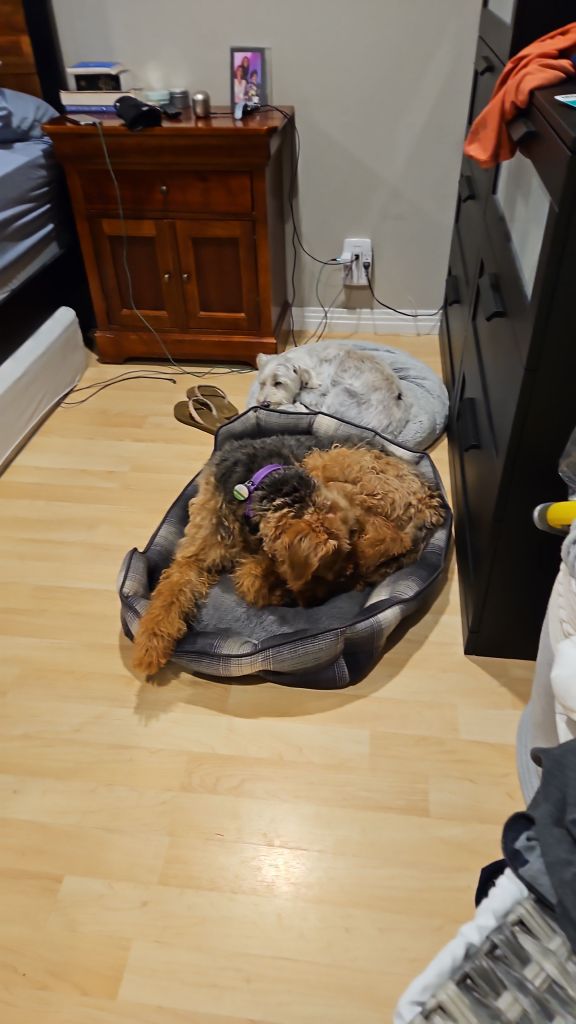
My previous dog passed away last year. She had a bitter rivalry with a small but feisty corgi down the street. There was never any actual interaction between them — not even a sniff — but that didn’t stop the drama. The feud began when the corgi, who sleeps by a front window, barked at her one day as we walked past. And just like that, the war began. The now-legendary Seven-Year Airedale vs. Corgi War.

Whenever we passed by the corgi’s house, he’d go wild. When the corgi passed by our house, our Airedale would lose her mind. And so it continued, a battle of barks and glares, until the day our girl passed away.

This year, we adopted a rescue — a gentle giant with a heart full of love and a history of abuse. She’s anxious, scared of her own shadow, and doesn’t bark or jump at windows. That is… until she met the corgi.

One day, we walked past the corgi’s house. He barked at us like always — and something changed. Our sweet, timid rescue perked up. The ancient war reawakened. Somehow, some way, the vendetta had passed on. Now, every time we even approach the corgi’s house, she’s alert and ready. She’s never barked, but you can feel the energy shift. I swear I hear “Let’s get ready to rumble” in my head every time we round the corner.

We don’t encourage the feud. We cross the street to avoid it. But our girl is always ready, as if she’s been briefed on this rivalry since day one.

I actually talked to the corgi’s owner last week and we laughed about it. He admitted it’s probably his dog’s fault — apparently, the little guy is a menace to all dogs who dare walk past his window. Maybe our new girl picked up on our energy. Maybe she inherited the rivalry. Who knows? It’s probably a bit of both.

For now, the Seven—now Eight—Year War between the Airedale and the Corgi continues. Maybe one day, someone will write a history book about it, and their legacy will live on.

#DogLife #RescueDog #AiredaleTerrier #CorgiDrama #DogRivalry #DogStories
#PetBehavior #LifeWithDogs #DogFeuds #FunnyDogStories
#NeighborhoodDrama #LetTheDogsBark #EpicDogFeud #PawliticalConflict #SmallDogBigAttitude #TaleOfTwoDogs #DogLove #PetLegacy #NewBeginnings #FromGriefToHealing #BondBeyondWords #DogsAreFamily #BlogPost #TrueStory #DogBlog #AnimalTales #PetLife

Gravity, Weight Loss, and a Really Good Bra

Weight loss is a funny thing, but then again, so is gravity. As we get older, gravity becomes even funnier. Our skin loses its elasticity, our asses start to sag, and if we have tattoos, they begin shifting like the continents. Those perky 90-degree boobs start to resemble a geometric puzzle.

I often joke that one way to combat that is by tying my boobs to my ass, thinking it might create some equilibrium. Alas, I digress.

When you combine aging with weight loss, gravity plays an even bigger role. I’ve lost 30 pounds this past year (yes, I’m on Wegovy), but no, it wasn’t done out of vanity. I have several autoimmune diseases that took a toll on my body. After the weight loss, my blood tests and heart tests are looking better, and surprisingly, even my IBS has improved. All my doctors are happy, and let’s be honest, I live to make my doctors happy.

The 30 pounds are quite noticeable on my five-foot-nothing frame, and gravity noticed it too. Last weekend, I ran into an acquaintance I hadn’t seen in a while. She commented on my weight loss, but instead of saying, “You look great!” she said, “I can tell you lost weight because your boobs are saggy.” I started laughing—not from embarrassment, but because I found it funny.

This acquaintance had a breast reduction, so she’s very observant about other people’s breasts. I think we tend to judge or observe others based on the things we’re most unhappy about, and that impacts how we see people and life in general. She didn’t mean to be rude, and I don’t think she even realized it was.

Yes, gravity has taken its toll on my body, and weight loss has combined with it in ways that aren’t exactly fun. But I accept it with grace—and a really good bra.

#WeightLossJourney #GravityGotMe #BoobsAndButt #AgingGracefully

#WegovyJourney #WeightLossRealTalk #EmbraceTheSag #TalesOfGravity

#BodyPositiveHumor #AcceptanceAndHumor #AutoimmuneAwareness

#LaughingThroughLife #PerkyToPuzzled #SaggyButHappy

Bread Trucks and Blood Pressure: Finding Humor in Life’s Challenges

funny. You see, I’m a Celiac — I can’t eat gluten because of an autoimmune disease. I was diagnosed with it as a “birthday gift” on my 39th birthday, and as a former carb-lover, giving up bread and pasta wasn’t easy. Back in the day, gluten-free options were hard to come by and, frankly, not very tasty. And, let’s be honest, gluten-free bread is still the size of a postage stamp.

Life these days is hectic, crazy, and sometimes full of stress. Lately, work has only made it worse. My cardiologist told me I need to lower my blood pressure. I asked him how to do that when people around me constantly annoy me and drive me crazy. I’m still waiting for a solid answer to that question.

I try not to take everything too seriously — not because I think life is a joke, but because we’re all dealing with serious things. We need to find humor in what surrounds us. Unfortunately, that doesn’t seem to help much with my blood pressure.

Losing my hearing was tough. I went through the stages of grief because losing such an important sense impacts my quality of life and everyday well-being. But five years later, when people ask how it affects me, I joke that it’s actually a blessing for my husband — I don’t hear any of his annoying remarks anymore.

So, having a bread truck full of gluten following me around was pretty funny. Who knows, maybe it’ll even show up in my dreams tonight.

#GlutenFreeHumor #CeliacLife #FindingTheFunny #LaughThroughTheStruggles
#CeliacWarrior #HealthWithHumor #BreadTruckChronicles #AutoimmuneLife #GlutenFreeJourney #StressAndLaughter

Our Foster Fail: The Story of Shuki, Our Gentle Giant

We fostered a rescue dog several months ago with the intent to “foster fail” and adopt her. Happily, we did fail at fostering, and now she shares our last name.

Our Shuki girl was rescued from a house that did not feed or give water to her and her siblings. She was extremely malnourished and very suspicious when we got her. Feeding time was like a piranha frenzy in the Amazon. She ate her food so quickly, you could barely count the seconds, out of fear that it would be taken from her. She gulped water the same way, creating big, messy puddles all around her.

She’s been with us for almost three months now, and we love her dearly. In that time, we’ve seen her grow from a fearful, malnourished pup into a sweet, cuddly companion. She is a big cuddler, unlike our previous dog, and seeks pets and attention quite a lot. She’s also scared of many things, especially big white cars. We suspect her abuser had a car like this.

Shuki knows many commands at this point and understands them in two languages. She is a very smart girl.

This week, however, we had a scary incident. Some kids came fast behind her on a walk with motorized scooters, and it freaked her out. She was so scared that she broke the leash and ran away. We panicked. Since she’d only been with us for three months, we weren’t sure where she would run to and were afraid she’d get hit by a car—or worse.

An emergency family phone call ensued, and we all went looking for her, worried sick. We found her about 10 minutes later—or better yet, she found us. She ran home, and luckily my husband was close by. He saw her and opened the door for her to enter the house. On the Ring camera, you can see her calmly walking into the house, while we were all in a panic.

Shuki girl ran home. She ran back to a place where she felt safe, secure, and loved.

There’s a common “Three, Three, Three” rule for rescue dogs. It means: three days to decompress, three weeks to learn the house routines, and three months to feel fully at home. We are very happy that she found her way home and that she considers our home her safe place. She’s a gentle giant, and we’re hopeful that she’ll be with us for many more years to come. But we could certainly do with fewer scary moments like that one!

Surveys, Feedback, and the Silence That Follows

Every year, my employer sends out an anonymous survey to gather employee feedback, but I can’t help but wonder why they even bother. It’s supposed to be a chance for employees to voice their thoughts, yet nothing ever seems to change—and I’m not sure anyone even believes it’s anonymous.

The first time I filled out the survey, I was the only one in the company with my unique position, so my feedback was easily identifiable. In the comments section, I pointed out that the survey couldn’t truly be anonymous for someone in my position. Little did they know, that was just the beginning of me becoming a “thorn” in their side.

Since then, I’ve continued to fill out the survey honestly, even though I know no one really cares about my feedback. I figured out how to make the sections for areas of improvement larger. One year, I copy-pasted my MBA thesis on leadership—full of practical advice for change—just to see if anyone would notice. It was a thesis that earned a distinction, yet still, nothing changed.

I love my job, and I genuinely like the people I work with, which is why I’m still here after many years. But I can’t help but question the purpose of these surveys. Are they just for show so the company can tick a box and say they care? Or are there companies out there that actually listen to their employees and take meaningful action?

I know this conversation has probably been had many times before, and some companies do genuinely care about their employees. But for me, I’m still not sure.

Beyond the Resume: Seeking Independence and Fulfillment

I’ve spent the last several days at home, taking care of my dog while she recovered from surgery. With all this downtime, I decided to tackle a few projects. One of those was updating my resume. I typically update it twice a year—not because I’m actively job hunting, but to ensure my information stays current and to keep up with new technology. After all, it never hurts to have an updated resume, as you never know what might come up.

But as I was updating my resume, a thought struck me—why am I doing this? What’s the point of updating my resume? Am I actively looking for a new job or a career change?

I’m in my mid-fifties, and I’ve started to think more seriously about what my future holds. The idea of working for a corporation no longer feels as appealing as it once did. So, am I looking for a new career? Not necessarily. What I’m really seeking is independence. I want financial stability, a place where my skills, knowledge, and life experience are valued and appreciated.

How do you update your resume when you’ve been in the workforce for many years, especially when you’re told it should only be one page? And with age discrimination at play, a longer resume can easily make you a target.

Did I update my resume? No, I didn’t. Instead, I decided to take a brain pause—to step back and really think about what I want for my future. It’s not about rushing into another job or career change, but about aligning my next steps with my values and goals for independence and fulfillment.