When My Husband Asked: What’s Wrong with Gluten?

I was asked the most bizarre question today by the Passenger Prince.
He asked me, “What’s the problem with gluten?”

In a regular household, this question might not seem strange. But in our house—where three of us have Celiac disease—it was downright shocking.

I, the Passenger Prince’s wife, was diagnosed when I was thirty-nine, almost twenty years ago. Two out of our three kids received the lovely Celiac gene as well.

I was driving the Prince to work when he asked me this question, and I almost stopped the car in astonishment.

The man saw what I went through before I was diagnosed. He saw our daughter’s health deteriorate until she was a shadow of herself. And yet, he still asked that question.

After I collected myself for a mini second, I asked him where this was coming from. Apparently, Dr. Google had suggested that going gluten-free could help with seizures.

As much as I appreciate Dr. Google’s extensive medical training, I told him he should talk to a neurologist—or at least a nutritionist.

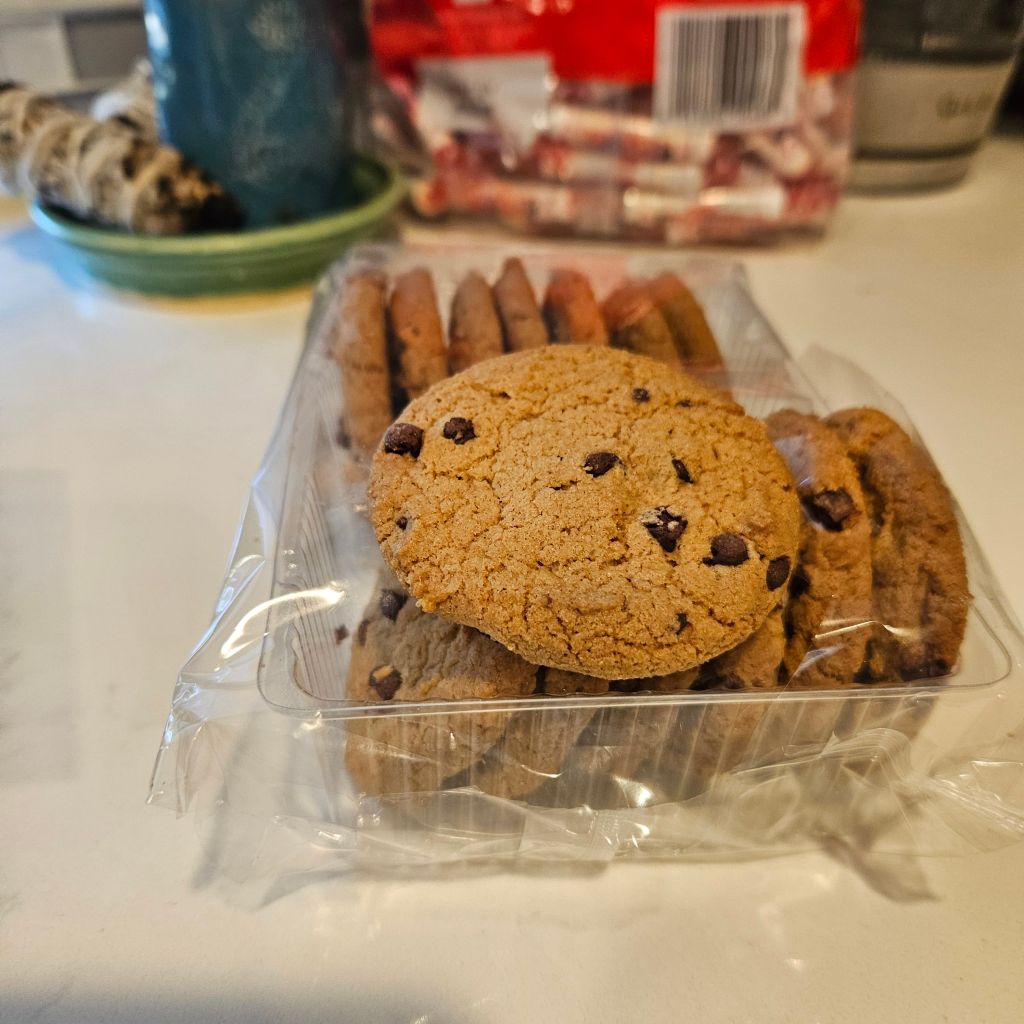
I’ve been gluten-free for many, many years now. But every once in a while, I miss a normal-sized slice of bread, good pasta, and the freedom of eating anywhere without reading labels or worrying about cross-contamination. I still get excited when I discover new gluten-free pizza options at Costco.

So back to his “silly” question: Gluten is great—very tasty, even. But for us Celiacs, gluten is the enemy and even after twenty years gluten-free, the learning never ends — especially in our house.

Puzzling Through BS and RBBB: A (Dark) Humor Guide to Medical After‑Notes

Years ago, when texting was just taking off, I had to teach myself all the lingo—the endless shortcuts, acronyms, and cryptic abbreviations. These days, I find myself learning a brand‑new vocabulary: medical lingo.

I’m not planning to enter the healthcare field anytime soon—this is purely by necessity. My husband had a seizure—at a Costco, of all places—and was rushed by ambulance to the emergency room. A week and a half later, we saw a neurologist, scheduled all the necessary tests, and began collecting the “after‑notes.” After‑notes from the paramedics, from the ER, from the first doctor’s appointment… and I’m bracing myself for more after‑notes from the MRI and EEG.

These after‑notes feel like military orders—packed with shortcuts and initials. Thankfully, I did serve in the military, and I love puzzles. So here I am: deciphering, decoding, trying to understand what happened and what everything means.

Here are a few of the gems I’ve already cracked:

  • BS — not “bullshit,” not “bachelor of science”—it’s blood sugar.
  • BIBA — not a Honda model—brought in by ambulance.
  • NSR — not some sinister government agency—it’s normal sinus rhythm.
  • ED — not the embarrassing kind—it’s emergency department.
  • Hx — not a TV channel—it’s history.
  • RBBB — not about bananas—it’s right bundle branch block.

We’re taking this all very seriously, don’t get me wrong. We’re still waiting for more test results, and until we have clear answers, the dark humor is just part of how we cope. I’m looking forward to meeting the next batch of acronyms with the same dry wit.

Maybe I should launch a TikTok channel just for this: “Medical Lingo Decoded: Episode 1.”

The Sounds We Forget to Hear

The Sounds We Forget to Hear

Hearing is something most of us take for granted. We rarely pause to notice the sounds that surround us—the rustle of leaves, the hum of traffic, the laughter of children. Instead, we walk through life plugged into headphones, filling every moment with music, podcasts, or phone calls. We wear them when we walk, talk, commute, and definitely when we exercise.

This week, my youngest made crème brûlée. She’s been perfecting her recipes lately and this time offered dairy-free, vegan, and lactose-free options. In our household, that’s not just a nice gesture—it’s a necessity. We are a home full of celiacs, lactose-free lifestyles, and IBS sufferers. My children, poor things, didn’t need a genetic test to prove maternity—they inherited all my “fun” genes: the celiac gene, the IBS gene, and definitely the lactose intolerance gene.

But here’s the moment that gave me pause: as she torched the sugar on top of the crème brûlée, I heard it. The delicate, satisfying crackle of caramelizing sugar. That beautiful, subtle sound was only possible for me to enjoy because I had my hearing aids in. Without them, I’d have missed it entirely. That tiny moment of joy made me think about how much we miss when we don’t stop and really listen.

Take Charlie, our neighborhood squirrel. Charlie is something of a local character—and a sworn enemy of our dogs. (They’re terriers. It’s instinct.) Charlie, bold as ever, hisses at them from his perch on the tree. Every time he does it and I actually hear it, I can’t help but laugh. It’s such a strange, small sound—one I never noticed before hearing aids. But now I hear it, and every time I do, I’m delighted.

When I was younger, my mother used to warn me: “Don’t listen to music so loud—you’ll ruin your hearing!” I wish that was the reason I have hearing loss. But for me, it’s just part of the hand I was dealt.

I remember the day I got my first hearing aids. My audiologist looked at me and said, “Just a heads-up—the world is loud.” She wasn’t wrong. It is loud. But it’s also incredible. Hearing the world—even when it’s loud—is a gift.

So if you can hear the birds in the morning, the hiss of a squirrel, or the crackle of sugar on a homemade dessert—pause for a moment. Take your headphones off. Listen. The world has so much to say, and it’s worth hearing.

Surveys, Feedback, and the Silence That Follows

Every year, my employer sends out an anonymous survey to gather employee feedback, but I can’t help but wonder why they even bother. It’s supposed to be a chance for employees to voice their thoughts, yet nothing ever seems to change—and I’m not sure anyone even believes it’s anonymous.

The first time I filled out the survey, I was the only one in the company with my unique position, so my feedback was easily identifiable. In the comments section, I pointed out that the survey couldn’t truly be anonymous for someone in my position. Little did they know, that was just the beginning of me becoming a “thorn” in their side.

Since then, I’ve continued to fill out the survey honestly, even though I know no one really cares about my feedback. I figured out how to make the sections for areas of improvement larger. One year, I copy-pasted my MBA thesis on leadership—full of practical advice for change—just to see if anyone would notice. It was a thesis that earned a distinction, yet still, nothing changed.

I love my job, and I genuinely like the people I work with, which is why I’m still here after many years. But I can’t help but question the purpose of these surveys. Are they just for show so the company can tick a box and say they care? Or are there companies out there that actually listen to their employees and take meaningful action?

I know this conversation has probably been had many times before, and some companies do genuinely care about their employees. But for me, I’m still not sure.

Beyond the Resume: Seeking Independence and Fulfillment

I’ve spent the last several days at home, taking care of my dog while she recovered from surgery. With all this downtime, I decided to tackle a few projects. One of those was updating my resume. I typically update it twice a year—not because I’m actively job hunting, but to ensure my information stays current and to keep up with new technology. After all, it never hurts to have an updated resume, as you never know what might come up.

But as I was updating my resume, a thought struck me—why am I doing this? What’s the point of updating my resume? Am I actively looking for a new job or a career change?

I’m in my mid-fifties, and I’ve started to think more seriously about what my future holds. The idea of working for a corporation no longer feels as appealing as it once did. So, am I looking for a new career? Not necessarily. What I’m really seeking is independence. I want financial stability, a place where my skills, knowledge, and life experience are valued and appreciated.

How do you update your resume when you’ve been in the workforce for many years, especially when you’re told it should only be one page? And with age discrimination at play, a longer resume can easily make you a target.

Did I update my resume? No, I didn’t. Instead, I decided to take a brain pause—to step back and really think about what I want for my future. It’s not about rushing into another job or career change, but about aligning my next steps with my values and goals for independence and fulfillment.

Small Changes, Big Impact – My January Resolutions.

As January 1st approaches, so do the typical New Year’s resolutions. Gyms become packed with people hoping to exercise more and lose weight, and exercise machines and gym clothes are on sale everywhere. However, not every resolution has to be a huge, overwhelming goal that is unlikely to be followed through. Instead, choose a couple of realistic ones—and maybe one big, ambitious goal for fun.

Personally, I avoid setting wild resolutions because my life is already hectic enough. But here are some simple, achievable resolutions I’m committing to for the new year ahead, focusing on my well-being and peace of mind:

As January 1st approaches, so do the typical New Year’s resolutions. Gyms become packed with people hoping to exercise more and lose weight, and exercise machines and gym clothes are on sale everywhere. However, not every resolution has to be a huge, overwhelming goal that is unlikely to be followed through. Instead, choose a couple of realistic ones—and maybe one big, ambitious goal for fun.

Personally, I avoid setting wild resolutions because my life is already hectic enough. But here are some simple, achievable resolutions I’m committing to for the new year ahead, focusing on my well-being and peace of mind:

  1. Toss out old makeup and check expiration dates.
    Beauty products can expire and become ineffective or even harmful. It’s time for a refresh!
  2. Replace those worn-out toilet cleaning brushes.
    We all know how grimy these can get. A new brush will keep things fresh!
  3. Go through your home library and donate a few books.
    Clear out books you no longer need, and pass them on to a local charity or library to give them new life.
  4. Tackle one junk drawer.
    Pick a drawer in your home, clean it out, and organize it. Small decluttering efforts make a big difference.
  5. Commit to one day a month without social media.
    Giving yourself a break from screens can improve mental health and foster more meaningful connections.
  6. Reach out to a friend you haven’t heard from in a while.
    Life can get busy, but reconnecting with old friends can be refreshing and rewarding.
  7. Meet a friend for a walk or a hike.
    Physical activity paired with quality time is a great way to bond while staying active.
  8. Update all your security settings.
    Make sure all your accounts have strong passwords, two-step authentication, and up-to-date security settings.
  9. Remember that there is life beyond work.
    Balance is key to avoiding burnout, so take time for yourself outside of your professional commitments.
  10. “Buy Flowers for Yourself Once a Week”

Flowers have a way of brightening up any space and boosting your mood. Make it a weekly habit to treat yourself to a fresh bouquet. It’s a simple, inexpensive way to bring beauty and joy into your life—plus, it’s a reminder to take care of yourself!

These resolutions are manageable and focused on improving my everyday life. Feel free to use my goals as a base and adapt to your life and I hope you’ll consider setting your own personal, achievable goals this year!

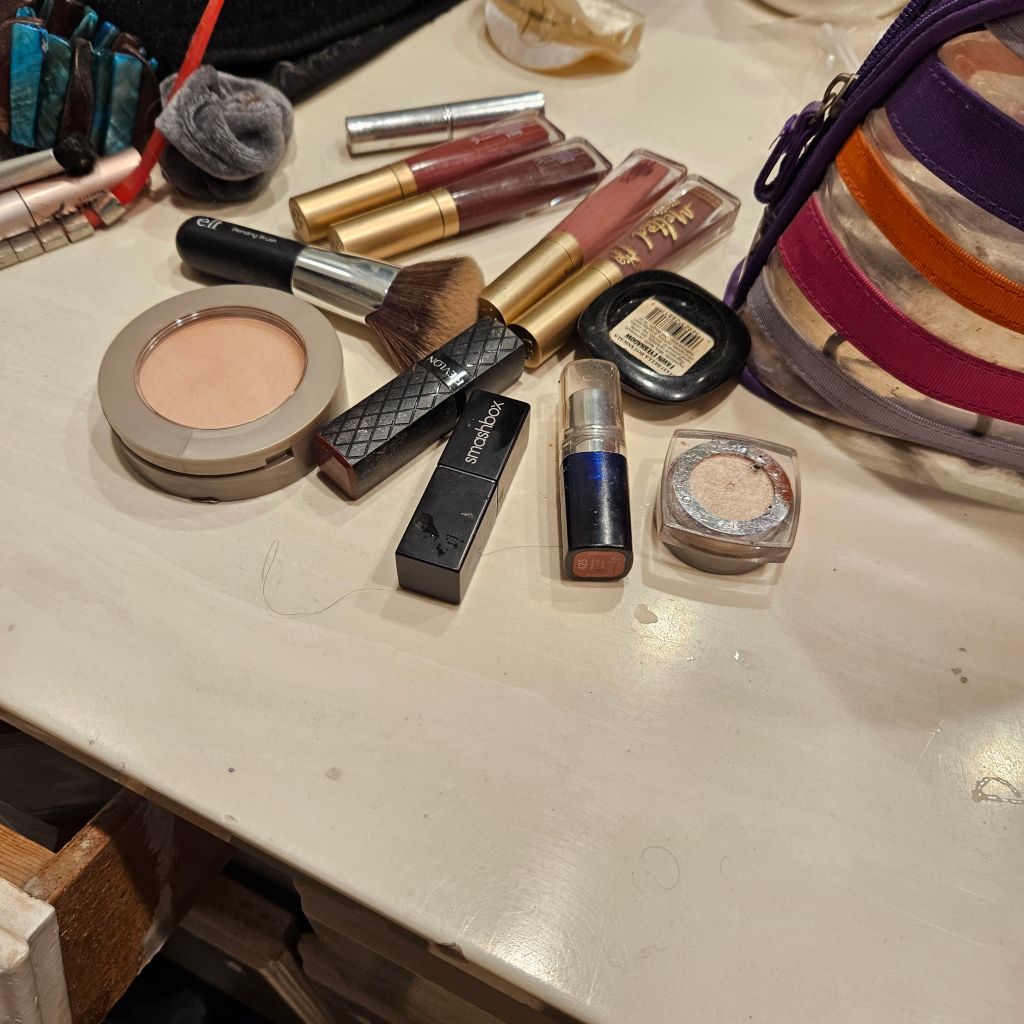
Apparently, I have a gazillion lipsticks  and o don’t even use any of these colors!

My Emogi Stone

In July 1799 Napoleon’s army found the Rosetta stone and ever since then hieroglyphs have been interpreted and understood. This was a great moment in history for the human kind and as someone could finally interpret the hieroglyphs in Egypt.

And then in the 2000 we had another monumental discovery, emojis. Ever since then humanity went back and humans started conversing again in pictures, apparently the cave man had it right. I recently received a text from a prospective client of mine on my work phone in response to something I texted them. Instead of a real conversation I received a text back with 5 faces with tears, 10 praying hands and 3 hearts. Mind you, this prospective client is an adult and this was a business text. We have never met each other. As I am  an adult who only uses emojis in texts with immediate family and friends, I was a little dumbfounded as I had no clue on how I am supposed to respond to this. 

What happened to business writing or texting? A couple of years ago I took a great class through Coursera on Business writing, professional texting etiquette was not part of the course. Neither was interpreting emojis part of the course. I am aware I am a little older and don’t use emojis that often and I do use real words and sentences so I am not always sure what the interpretations for emojis are. I am debating creating an  “ Emogi Stone” to help people interpret what other people are texting us or to make sure we are not texting something weird to others.

However, in my own personal humble opinion, there is no room for emojis in business emails and texts unless you work for a software company that creates emojis as part of their business. It seems like we regressed back a couple of hundred of years. So in your personal life go ahead, and if you really feel inclined to send me a business text, please   📧 🔠🙏

Eternal student

Every Tuesday I wake up very early for my language class. It is an international class so people log in literally from all corners of the earth. It is still dark outside, cold and everyone else is still sleeping. Even the dog does not understand what I am doing up at this  crazy time. And every Tuesday when the alarm goes off and I get dressed quietly in the dark so I will not wake my husband up, I ask myself – are you crazy, why on earth are you doing this? Go back to sleep.

And yet, after each class I am happy and I  smile, as tired as I am, I really enjoy this class even though I am not really good in this class. 

As an adult it is fun for me to learn new languages and just learn new skills. I find it really good for my soul as it brings me joy and probably helps combat dementia or alzheimer. Some tell me I am nuts for taking on new study areas. After I finally finished my MBA my husband looked at me and asked when I am going to get my PHD, I said never. But these days I am reconsidering. 

We are never too old to learn and yes I finished my masters at 54, but who says I can’t get a PHD by 65, I am not in a hurry and I don’t mind being an old woman when I get my degree. This is part of the fun of doing  new things when you are older and have the freedom to follow whatever your heart desires. Macrame, new language, or anything else that suits me at the time.

And if waking up in the dark, logging in to a class with people from all around the world makes me happy albeit tired, great. I shall continue, who knows maybe I did find my new calling as the eternal student.

Keeping meetings on track

Today is what I call meeting  Thursday day,  our first monthly all staff meeting of the new year.  I hate meetings.It’s not that I don’t like meeting, I really dislike big all hand meetings. They usually drag on forever or what seems like forever. There is always someone who likes to hear their voice more than actually listen and collaborate and quite frankly they are usually boring after the first 5 minutes.  If we are home on zoom at least we can do something when we lose focus but what can you do when forced to sit in an actual meeting where we can’t hide. Maybe there is something positive for zoom meetings after all.

Thankfully the meeting was on zoom, however I had to present and lead part of it which meant I actually had to  pay attention.  So when we planned this meeting to avoid all the issues  I hate about meetings we decided on parameters- we limited the meeting time to a max of one hour. This forced us to focus on the most important issues and not to wander off. We also decided on the topics ahead of time and put everything in clear bullet points on a shared screen so everyone can see and for us not to lose focus and if we did then one of the meeting leaders would steer everything back on the right track. And the most important for the meeting leaders, we did it just before lunch and made sure to be hungry so we will finish in a timely manner  and we were conscious of other people’s lunch time. I know this might seem weird when planning meetings, but we found that this  helps us with keeping meetings on point. I am not advocating for anyone to go to meetings hungry, I love food, but this is a method that works for us and I am sure everyone has their own guidelines for keeping meetings effective, that is unless they love meetings or the sound of their own voice.

Living In a Food bubble

I love cooking books, I love cooking shows, love kitchen gadgets and I really love to watch my country’s Master Chef. The only problem with what I wrote in the previous sentence is that I hate cooking but I really love eating. I don’t come from a line of cooks or mini chefs, I come from a line of those who find short cuts. When my kids were young stir fries were eaten frequently as was pasta, pizza, quesadillas and tacos, all foods that were easy to make with 3 young children.

The last 3 pandemic years when we were all home kinda changed my love hate relationship with the kitchen, I started cooking more and trying new foods and flavors. When I watched Master Chef I discovered foods I have never heard about before that apparently are commonly eaten in my country, foods that I have never heard about. When I say this my husband keeps reminding me that we have not lived there for 30 years so that might be it. But in reality when I researched this I discovered these foods were there always. I apparently have been living in a food bubble.

Technically food bubbles are not bad thing if this is what you like, we all have our go-to comfort foods that we can eat all day and every day. I do have to add that I am a Celiac, which means I do not have the food freedom that most people have. But during the pandemic I decided to expand my food range and try new things or even convert some interesting menus to become gluten free.

I have succeeded on some and failed miserably on others. My baking skills have improved and I can make a mean gluten free Brioche and focaccia bread that are not hard as a rock the following day. I also discovered more ethnic north African foods I like and figured out how to make them. My fails were on foods that were foreign to me and I had no intrinsic feel of what they taste like, just how they look like on TV or on paper. But my food journey is not over and I am continuing on my mission of breaking my food bubble.